
Introduction
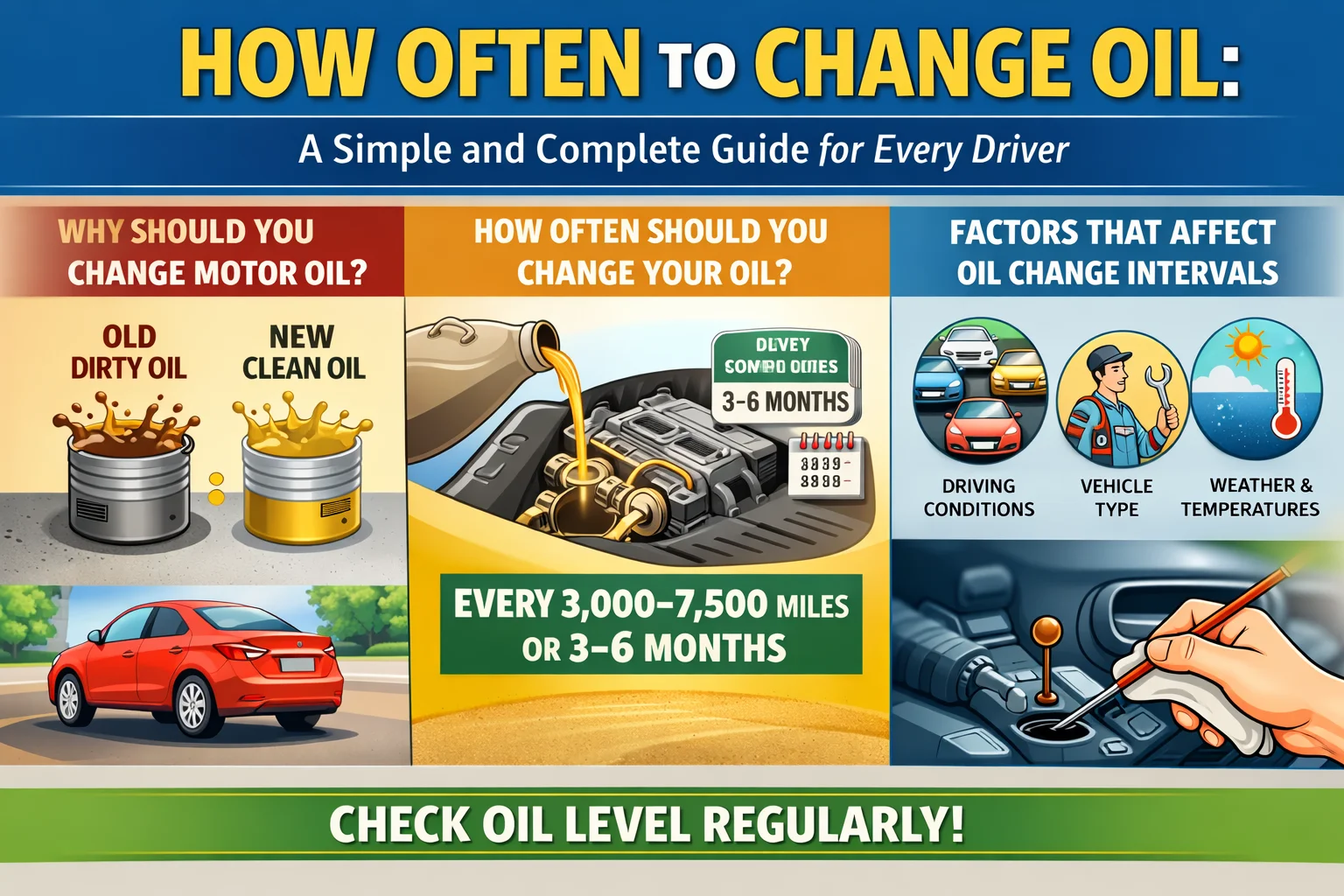
Taking care of your car does not have to be hard. One of the most important things you can do is change the engine oil on time. Many people ask the same question: how often to change oil in a car. The answer is not always the same for everyone. It depends on your car, your driving style, and the type of oil you use.
In simple words, engine oil keeps your car running smoothly. It reduces friction, cools the engine, and helps parts last longer. If you ignore oil changes, your engine can wear out faster. That can lead to expensive repairs. So learning how often to change oil can save you money and stress.
In this guide, I will explain everything in very easy language. You will learn when to change oil, how to do it, and what mistakes to avoid. I will also share real-life tips so you can take better care of your car.
Why Engine Oil Is So Important
Engine oil is like blood for your car. It flows through the engine and keeps everything working smoothly. Without oil, the metal parts rub against each other. This creates heat and damage.
Oil also helps clean the engine. It collects dirt, dust, and small particles. Over time, the oil becomes dirty and thick. When that happens, it cannot do its job properly.
Another important role of oil is cooling. Engines get very hot when running. Oil helps reduce this heat and protects engine parts.
If you delay oil changes, your engine may overheat. It can also lose power or stop working completely. That is why knowing how often to change oil is very important for every driver.
How Often to Change Oil (Basic Rule)
The most common question is simple: how often to change oil in a car?
In the past, people used to change oil every 3,000 miles. But today, modern cars are better. Most cars can go between 5,000 to 10,000 miles before needing an oil change.
Here is a simple table to understand:
| Oil Type | Change Interval (Miles) | Change Interval (KM) |
|---|---|---|
| Conventional Oil | 3,000 – 5,000 | 5,000 – 8,000 |
| Synthetic Blend | 5,000 – 7,500 | 8,000 – 12,000 |
| Full Synthetic Oil | 7,500 – 10,000+ | 12,000 – 16,000+ |
Always check your car manual. It gives the best answer for how often to change oil for your specific vehicle.
How Often to Change Synthetic Oil
Many modern cars use synthetic oil. It lasts longer and works better in extreme conditions. So, how often to change synthetic oil?
Most experts suggest changing synthetic oil every 7,500 to 10,000 miles. Some cars can even go up to 15,000 miles. But that depends on driving conditions.
If you drive in heavy traffic, dusty roads, or hot weather, you should change it sooner. Synthetic oil is strong, but it still gets dirty over time.
Here is a quick guide:
| Driving Condition | Synthetic Oil Change |
|---|---|
| Normal Driving | 8,000 – 10,000 miles |
| Heavy Traffic | 6,000 – 8,000 miles |
| Extreme Heat or Dust | 5,000 – 7,000 miles |
So, even with synthetic oil, you must understand how often to change oil based on your usage.
Signs Your Car Needs an Oil Change
Sometimes your car tells you when it needs fresh oil. You just need to notice the signs.
One common sign is the oil warning light. If it turns on, do not ignore it. Another sign is dark, dirty oil. Clean oil looks golden, but old oil looks black.
You may also hear engine noise. When oil is old, it cannot protect engine parts well. This causes knocking or ticking sounds.
Here are some common signs:
| Sign | What It Means |
|---|---|
| Oil light on | Low or dirty oil |
| Dark oil color | Oil is old |
| Engine noise | Poor lubrication |
| Burning smell | Oil overheating |
| Low fuel efficiency | Engine working harder |
If you see these signs, do not wait. Change your oil quickly instead of guessing how often to get oil change.
How Driving Habits Affect Oil Change Timing
Your driving style plays a big role in deciding how often to change oil.
If you drive short distances often, your engine does not fully warm up. This can cause oil to wear out faster. Stop-and-go traffic also puts more stress on your engine.
High-speed driving is different. It heats the engine more but keeps oil flowing well. However, long drives still wear out oil over time.
Here are some examples:
| Driving Style | Oil Change Impact |
|---|---|
| Short trips | Change sooner |
| City traffic | Change sooner |
| Highway driving | Lasts longer |
| Heavy loads/towing | Change sooner |
So, always adjust your oil change schedule based on your driving habits.
How to Change Oil in Car (Step-by-Step)
Learning how to change oil in car can save money. It is not very hard if you follow simple steps.
First, gather tools like oil, filter, wrench, and a container. Then warm up the engine slightly. This helps oil flow easily.
Next, remove the drain plug and let old oil flow out. Replace the oil filter with a new one. Then add fresh oil using a funnel.
Here is a simple table:
| Step | Action |
|---|---|
| 1 | Warm engine slightly |
| 2 | Drain old oil |
| 3 | Replace oil filter |
| 4 | Add new oil |
| 5 | Check oil level |
Always dispose of old oil safely. If unsure, you can visit a mechanic instead of doing it yourself.
How to Do Oil Change Safely
If you want to learn how to do oil change safely, follow these tips.
Always park on a flat surface. Use gloves to protect your hands. Make sure the engine is not too hot.
Use the correct oil type for your car. Using the wrong oil can damage your engine. Also, do not overfill the oil. It can cause pressure issues.
Here are safety tips:
- Use jack stands if lifting the car
- Wear gloves and safety glasses
- Check for leaks after changing oil
- Tighten the drain plug properly
Doing things safely is just as important as knowing how to do an oil change.
Choosing the Right Engine Oil
Not all oils are the same. Choosing the right oil helps your engine last longer.
You will see numbers like 5W-30 or 10W-40. These numbers show oil thickness. Your car manual tells you the correct type.
Here is a simple guide:
| Oil Type | Best For |
|---|---|
| 5W-30 | Most modern cars |
| 10W-40 | Older engines |
| 0W-20 | Fuel-efficient vehicles |
Always follow manufacturer recommendations. This helps you decide how often to change oil and which oil to use.
Cost of Oil Change (DIY vs Mechanic)
Oil change cost depends on how you do it. Doing it yourself is cheaper. But going to a mechanic is easier.
Here is a comparison:
| Method | Cost Range | Pros |
|---|---|---|
| DIY | Low | Saves money |
| Mechanic Shop | Medium to High | Saves time and effort |
If you are busy, a mechanic is a good option. But if you want to learn how to make oil change, DIY is a useful skill.
Common Oil Change Mistakes to Avoid
Many people make small mistakes during oil changes. These mistakes can harm the engine.
One common mistake is skipping oil changes. Another is using the wrong oil type. Some people also forget to replace the oil filter.
Avoid these mistakes:
- Not checking oil level
- Overfilling oil
- Using cheap or fake oil
- Ignoring warning signs
By avoiding these errors, you can better manage how often to change oil.
Real-Life Example: Why Oil Changes Matter
Let me share a simple example. A friend of mine ignored oil changes for months. He thought modern cars do not need frequent maintenance.
One day, his engine started making loud noises. Soon, the car stopped working. The repair cost was very high.
Another friend changed oil regularly. His car runs smoothly even after many years.
This shows why understanding how often to get oil change is important. Small care today can save big money later.
FAQs
1. How often to change oil in a new car?
Most new cars need oil change every 7,500 to 10,000 miles. Always check the manual.
2. Can I go longer between oil changes?
Sometimes yes, but not recommended. It depends on oil type and driving habits.
3. How do I check engine oil level?
Use the dipstick. Pull it out, wipe it, insert again, and check the level.
4. Is synthetic oil better?
Yes, it lasts longer and protects better. But it costs more.
5. What happens if I skip oil change?
Your engine may overheat and get damaged. Repairs can be expensive.
6. How long does an oil change take?
It usually takes 20 to 45 minutes, depending on method.
Conclusion
Now you clearly understand how often to change oil and why it matters so much. It is one of the easiest ways to keep your car healthy and running smoothly.
Always follow your car manual, watch for warning signs, and adjust based on your driving habits. Whether you learn how to change oil in car yourself or visit a mechanic, regular oil changes are a must.
Think of it as a small investment for long-term benefits. A little care today can prevent big problems tomorrow.
If you found this guide helpful, start checking your oil today. Your car will thank you for it! 🚗