Boiling eggs sounds easy. Yet many people still ask the same question: how long does it take to boil eggs so they turn out just right? Some eggs come out too soft. Others become dry and chalky. The good news is that small timing changes can fix this problem.
This guide shares clear steps, tested timing tips, and simple tricks anyone can follow. You do not need special tools. You only need fresh eggs, water, and a pot. I have used these steps many times at home for quick breakfasts and school lunches. They work well for beginners and busy families.
By the end of this guide, you will know exact cooking times for soft, medium, and hard eggs. You will also learn why timing changes based on egg size and heat level. Let’s make boiling eggs simple and stress‑free.
Why Knowing the Right Boiling Time Matters
Many people think egg boiling is guesswork. That is not true. Timing changes the inside texture of the egg. Even one extra minute can make a big difference. That is why people often ask how long does it take to boil an egg before cooking.
When eggs cook too long, the yolk turns pale and dry. A green ring may appear around the yolk. This does not look nice. The taste also becomes less pleasant. Short cooking keeps eggs creamy and smooth.
Correct timing also helps with peeling. Eggs cooked the right way peel faster. This saves time in the kitchen. It also keeps the egg shape neat for serving. Learning proper timing makes cooking easier and more enjoyable.
Average Boiling Time for Eggs
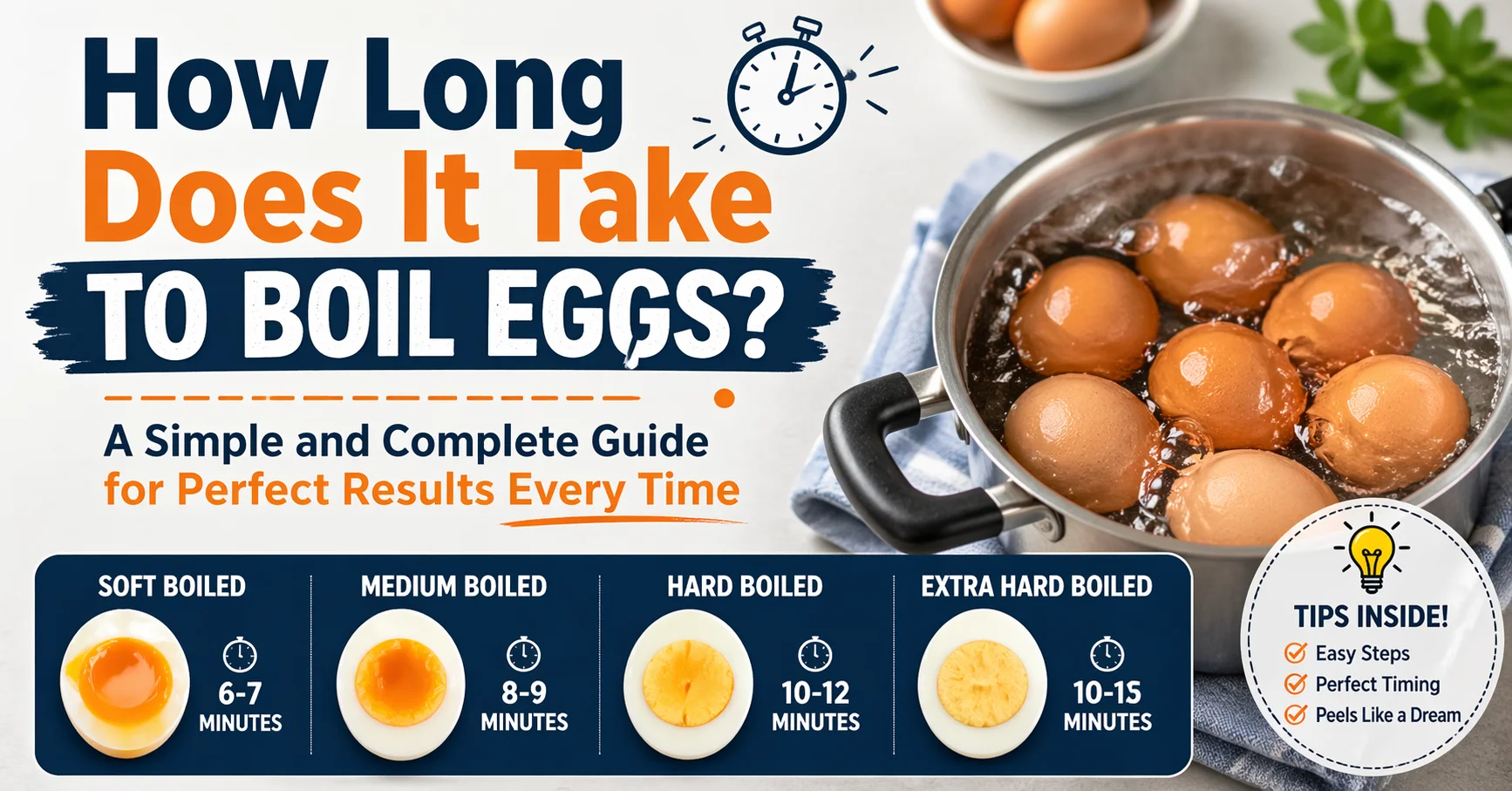
Most home cooks want a quick answer first. So here is a simple guide. These times work for large eggs cooked in gently boiling water.
| Egg Style | Boiling Time | Texture Result |
|---|---|---|
| Soft boiled | 4–6 minutes | Runny yolk |
| Medium boiled | 7–9 minutes | Creamy center |
| Hard boiled | 10–12 minutes | Firm yolk |
These times help answer the common question: how long does it take eggs to boil for daily cooking. Still, exact timing may change slightly depending on egg size and stove heat.
Always start timing once the water begins to boil gently. That keeps results more accurate.
How Long Does It Take to Hard Boil Eggs Perfectly
Many people prefer firm eggs for lunch boxes and salads. So they often ask how long does it take to hard boil an egg without making it dry.
For best results, cook large eggs for about 10 to 12 minutes after boiling begins. Then cool them quickly in cold water. This step stops extra cooking inside the shell.
Cooling also makes peeling easier. I often place eggs in ice water right after boiling. This simple habit improved my results a lot. The shells slide off more easily now.
If your eggs are extra large, add one more minute. If they are small, reduce time slightly.
Step‑by‑Step Method for Boiling Eggs the Right Way
A simple process helps remove confusion. Follow these easy steps each time you cook.
First, place eggs in a pot in a single layer. Add water until eggs are covered by about one inch. Turn heat to medium high and wait for boiling.
Once water starts bubbling gently, begin timing. This step answers the question how long does it take for eggs to boil with better accuracy.
After cooking, move eggs into cold water. Let them rest for five minutes. This stops cooking and protects texture.
Now your eggs are ready to peel and enjoy.
Egg Size Changes Cooking Time
Egg size plays an important role in cooking results. Many people forget this detail when asking how long does it take to cook hard boiled eggs at home.
Small eggs cook faster. Large eggs take longer. Extra‑large eggs need the most time. Even two minutes can change the yolk texture.
Here is a helpful size guide.
| Egg Size | Recommended Hard Boil Time |
| Small | 9 minutes |
| Medium | 10 minutes |
| Large | 11 minutes |
| Extra large | 12–13 minutes |
Checking egg size before cooking improves success. It also prevents overcooking.
Fresh Eggs vs Older Eggs: Which Are Better for Boiling?
Fresh eggs taste wonderful. But they are harder to peel after boiling. Older eggs peel more easily. This surprises many beginners.
If you bought eggs today, store them in the fridge for several days before boiling. This helps peeling later. I noticed a big difference after trying this simple trick.
This tip helps people who wonder how long does it take to make hard boiled eggs that look smooth and neat after peeling.
Still, both fresh and older eggs cook safely. The difference mostly affects peeling ease.
Stove Heat Level Makes a Difference
Strong heat cooks eggs faster. Gentle heat cooks them more evenly. That is why heat control matters when people ask how long does it take eggs to.boil correctly.
A rolling boil can shake eggs too much. This may crack shells. A gentle boil works better.
I recommend medium heat after water starts boiling. This keeps shells safe and yolks smooth. It also prevents rubbery egg whites.
Balanced heat makes cooking more reliable every time.
Should You Start Eggs in Cold or Boiling Water?
Both methods work well. Each method gives slightly different results.
Starting with cold water is simple. It heats eggs slowly. This reduces cracking. Many home cooks prefer this method.
Adding eggs to boiling water cooks them faster. This method gives more control over timing. It helps answer the question how long does it take for an egg to boil with greater precision.
Choose the method that fits your cooking style. Both produce tasty results.
How to Tell When Boiled Eggs Are Done
Sometimes timers are not enough. Visual signs also help confirm cooking results.
After boiling, spin the egg gently on the counter. A cooked egg spins smoothly. A raw egg wobbles more.
Another method is cracking one egg open to check texture. This works well when cooking many eggs together.
These tricks help anyone unsure how long does it take to hard boil eggs during busy cooking times.
Practice makes this easier with experience.
Cooling Eggs Quickly Improves Texture
Cooling eggs after boiling is very important. Many beginners skip this step. That leads to overcooked yolks.
Move eggs into cold water right away. Leave them there for several minutes. This stops cooking inside the shell.
Cooling also prevents dark rings around yolks. It keeps eggs looking fresh and bright.
This step improves results when learning how long does it take to boil eggs for meal prep or salads.
It is a simple step with big benefits.
Easy Peeling Tips That Save Time
Peeling eggs should not feel frustrating. A few small tricks help a lot.
Tap eggs gently on the counter. Roll them slightly to loosen shells. Start peeling from the wider end of the egg.
Peeling under running water also helps remove shell pieces faster.
These tips support people learning how long does it take to boil an egg for quick snacks or lunch boxes.
Small habits make cooking smoother.
Best Uses for Soft, Medium, and Hard Boiled Eggs
Each egg style works best for different meals. Choosing the right style improves taste and texture.
Soft eggs taste great with toast. Medium eggs work well in grain bowls. Hard eggs are perfect for salads and sandwiches.
Knowing egg styles helps answer how long does it take to hard boil an egg for specific meals.
Here is a helpful guide.
| Egg Type | Best Meal Ideas |
| Soft boiled | Toast, ramen |
| Medium boiled | Rice bowls |
| Hard boiled | Salads, snacks |
Matching egg texture with meals improves results.
Common Mistakes to Avoid When Boiling Eggs
Simple mistakes can change egg texture quickly. Avoiding them improves cooking success.
Do not overcrowd the pot. Eggs need space for even heating. Avoid cooking eggs too long after boiling begins.
Also avoid skipping the cooling step. This step protects texture and color.
These mistakes often confuse people asking how long does it take eggs to boil correctly.
Fixing them makes cooking easier.
Healthy Benefits of Boiled Eggs
Boiled eggs are simple and nutritious. They contain protein, vitamins, and minerals.
They support muscle growth and energy levels. They also help people feel full longer after meals.
Because they are easy to prepare, many families cook them often. Learning how long does it take to boil eggs helps create quick healthy meals.
Eggs are also affordable. That makes them a smart kitchen choice.
Table: Quick Timing Chart for Busy Cooks
This quick chart helps when cooking fast meals.
| Result Wanted | Cooking Time |
| Very soft yolk | 4 minutes |
| Slightly soft | 6 minutes |
| Medium center | 8 minutes |
| Fully firm | 11 minutes |
Keep this chart near your kitchen area for quick reference.
FAQs About Boiling Eggs
1. How long does it take to boil eggs from cold water?
It usually takes about 10 to 12 minutes after boiling begins. Start timing once bubbles appear.
2. How long does it take to hard boil eggs for salads?
Cook them for about 11 minutes. Then cool quickly in ice water.
3. Why do my boiled eggs crack during cooking?
Rapid boiling or crowded pots can cause cracks. Gentle heat helps prevent this problem.
4. Can I boil eggs without a timer?
Yes. You can watch water bubbles and use spinning tests after cooking.
5. Are overcooked eggs safe to eat?
Yes. They are safe but taste dry and less pleasant.
6. What is the fastest way to cool boiled eggs?
Place them in ice water immediately after cooking.
Final Thoughts: Boiling Eggs the Easy Way
Learning how long does it take to boil eggs makes cooking faster and more enjoyable. With the right timing, eggs become smooth, tasty, and easy to peel.
Small steps like gentle boiling and quick cooling improve results greatly. After practicing these methods several times, you will feel confident cooking eggs for any meal.
Try the timing guide in this article today. Test different textures and choose your favorite style. Soon, boiling eggs will become one of the easiest kitchen skills you use every week.