
Introduction
Getting a flat tire can feel scary, especially if you are alone or in a hurry. But the truth is simple: anyone can learn how to change a tire. You do not need to be a mechanic. You only need a few tools, some patience, and the right steps.
I remember the first time I had a flat tire. I was nervous and confused. But once I followed simple steps, it became easy. Now, I see it as a basic life skill—just like cooking or using a phone.
In this guide, I will walk you through everything you need to know about how to change a tire. I will keep the language simple, the steps clear, and add tips from real experience. By the end, you will feel confident and ready.
Why Learning How to Change a Tire Is Important
Learning how to change a tire can save you time, money, and stress. When your tire goes flat, you may not always find help quickly. Knowing what to do gives you control.
Flat tires can happen anywhere. It could be on a busy road, a quiet street, or even outside your home. If you depend only on others, you may wait for hours.
Also, roadside help can cost money. But if you know the basics, you can fix the problem in minutes. It also makes you feel more independent.
Most importantly, it keeps you safe. Standing on the road too long is risky. The faster you fix the tire, the safer you are.
Tools You Need to Change a Tire
Before learning how to change a tire, you need the right tools. Most cars already have these tools.
Here is a simple table to help you:
| Tool Name | What It Does |
|---|---|
| Spare Tire | Replaces the flat tire |
| Jack | Lifts the car off the ground |
| Lug Wrench | Loosens and tightens bolts |
| Wheel Wedges | Stops the car from rolling |
| Flashlight | Helps in dark conditions |
Make sure your spare tire is in good condition. Many people forget this, and it becomes a big problem later.
Step-by-Step Guide on How to Change a Tire
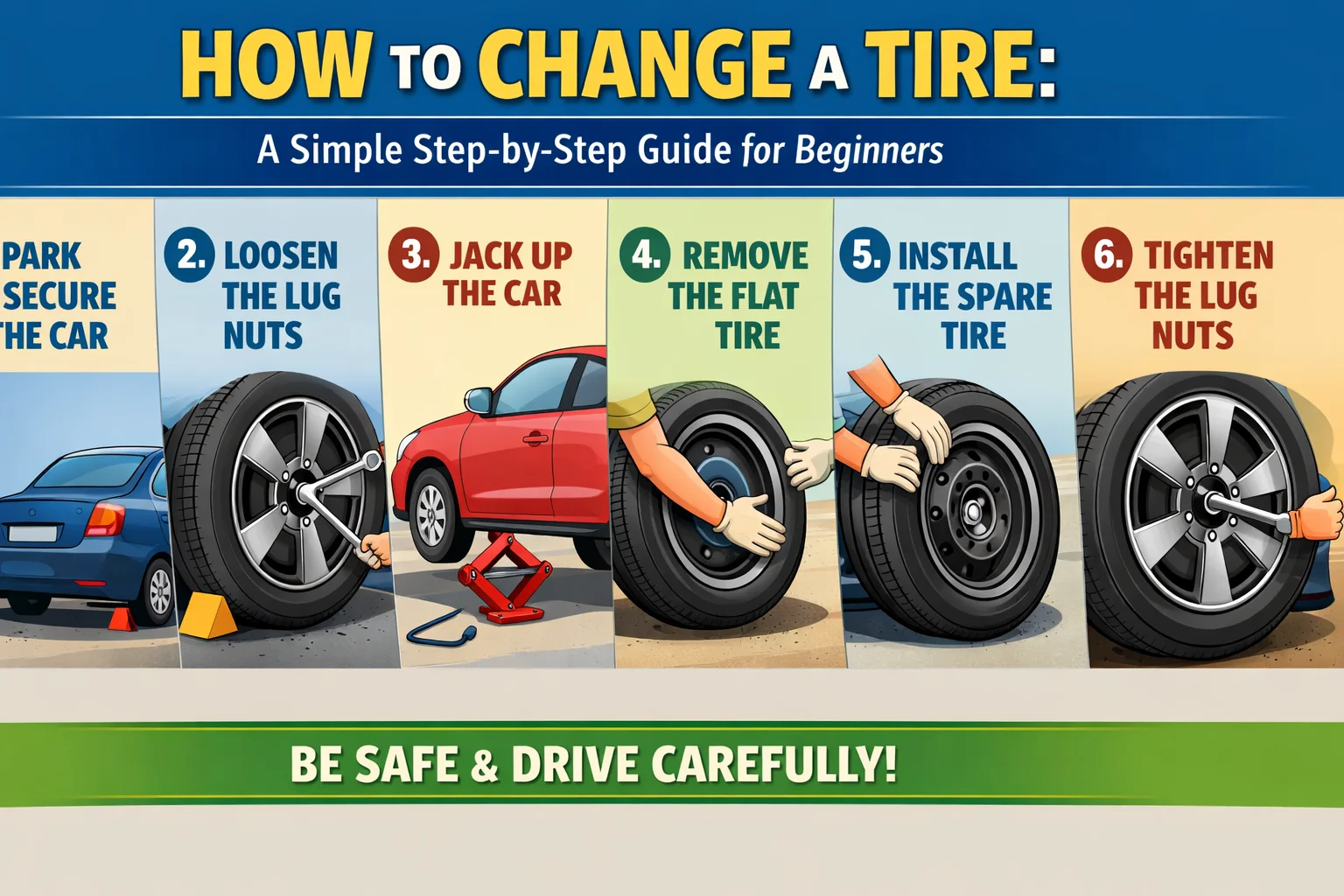
Now let’s go step by step. This is the most important part of learning how to change a tire.
| Step | Action |
|---|---|
| 1 | Park safely |
| 2 | Use hazard lights |
| 3 | Place wheel wedges |
| 4 | Loosen lug nuts |
| 5 | Lift the car with jack |
| 6 | Remove the flat tire |
| 7 | Install spare tire |
| 8 | Tighten lug nuts |
| 9 | Lower the car |
Follow each step slowly. Do not rush. Safety is always first.
Step 1: Find a Safe Place
The first thing in how to change a tire is finding a safe place. Move your car away from traffic if possible.
Choose a flat and stable surface. Avoid hills or soft ground. Turn on your hazard lights so others can see you.
If you are on a busy road, try to pull over as far as possible. Safety matters more than speed.
Take a moment to stay calm. Panic can lead to mistakes. A clear mind helps you work better.
Step 2: Secure the Vehicle
Before you start, make sure the car does not move. This step is often ignored, but it is very important.
Use wheel wedges or even bricks. Place them behind the tires. This stops the car from rolling.
Also, apply the parking brake. This adds extra safety.
Many accidents happen because people skip this step. So always secure your car before moving forward.
Step 3: Loosen the Lug Nuts
Now it is time to loosen the lug nuts. These are the bolts that hold the tire.
Use the lug wrench. Turn the nuts counterclockwise. Do not remove them fully yet—just loosen them.
Sometimes they are very tight. You can use your body weight to push the wrench. That helps.
This step is easier before lifting the car. Once the car is in the air, the tire will spin.
Step 4: Lift the Car with the Jack
Place the jack under the car. Check your car manual to find the right spot.
Slowly lift the car until the tire is off the ground. Do not rush this step.
Make sure the car is stable. If it shakes, lower it and adjust the jack.
Safety tip: never put your hand under the car while lifting.
Step 5: Remove the Flat Tire
Now remove the loosened lug nuts completely. Keep them in a safe place.
Pull the flat tire straight off. It may feel heavy, but you can handle it.
Place the tire on the ground so it does not roll away.
This step is simple but important in learning how to change a tire.
Step 6: Install the Spare Tire
Take the spare tire and align it with the bolts. Push it gently until it fits.
Put the lug nuts back on. Tighten them by hand first.
Make sure the tire is placed properly. If not, it can cause problems later.
This is one of the key steps in how to change a tire, so take your time.
Step 7: Lower the Car and Tighten Nuts
Slowly lower the car using the jack. Once the tire touches the ground, remove the jack.
Now tighten the lug nuts fully using the wrench. Do it in a star pattern.
Here is a simple table:
| Order | Nut Position |
|---|---|
| 1 | Top |
| 2 | Bottom |
| 3 | Left |
| 4 | Right |
This keeps the tire balanced.
Common Mistakes to Avoid
Many people make small mistakes while learning how to change a tire.
Here are some common ones:
| Mistake | Why It’s Bad |
|---|---|
| Not tightening nuts enough | Tire can come loose |
| Wrong jack position | Car may fall |
| Forgetting hazard lights | Risk of accidents |
| Using damaged spare tire | Unsafe driving |
Avoid these mistakes to stay safe.
Safety Tips Everyone Should Know
Safety is the most important part of how to change a tire.
Always wear gloves if possible. It protects your hands.
Do not change a tire on a busy highway if it is unsafe. Call for help instead.
Keep your tools clean and ready. A messy trunk can slow you down.
Also, check your spare tire every few months.
When You Should Not Change a Tire Yourself
Sometimes, it is better to call for help. Not every situation is safe.
If you are on a steep hill, avoid changing the tire. The car may roll.
If it is very dark and you have no light, wait for help.
Also, if you feel unsure or unsafe, trust your feeling.
Knowing how to change a tire also means knowing when not to.
Extra Tips from Real Experience
From my own experience, practice makes things easier. Try changing a tire at home once.
Keep a small kit in your car. Add gloves, a mat, and a flashlight.
Also, wear comfortable shoes. It makes the job easier.
One more tip: stay calm. Even if things go wrong, you can fix them.
These small tips make a big difference.
FAQs About How to Change a Tire
1. How long does it take to change a tire?
It usually takes 15 to 30 minutes. With practice, it becomes faster.
2. Can I drive long with a spare tire?
No, spare tires are temporary. Drive slowly and replace it soon.
3. What if my lug nuts are too tight?
Use more force or step on the wrench carefully.
4. Do all cars have a spare tire?
No, some cars use repair kits instead. Check your car.
5. Is it safe to change a tire alone?
Yes, if you follow safety steps and stay alert.
6. How often should I check my spare tire?
Check it every few months to ensure it has enough air.
Conclusion
Learning how to change a tire is one of the most useful skills you can have. It saves time, keeps you safe, and gives you confidence.
At first, it may seem hard. But once you try it, you will see how simple it is. Just follow the steps, stay calm, and take your time.
I strongly suggest practicing once at home. That way, when a real problem happens, you will be ready.
Now that you know how to change a tire, you are no longer helpless on the road. You are prepared, confident, and in control.
So next time you face a flat tire, do not panic—just take action. 🚗