
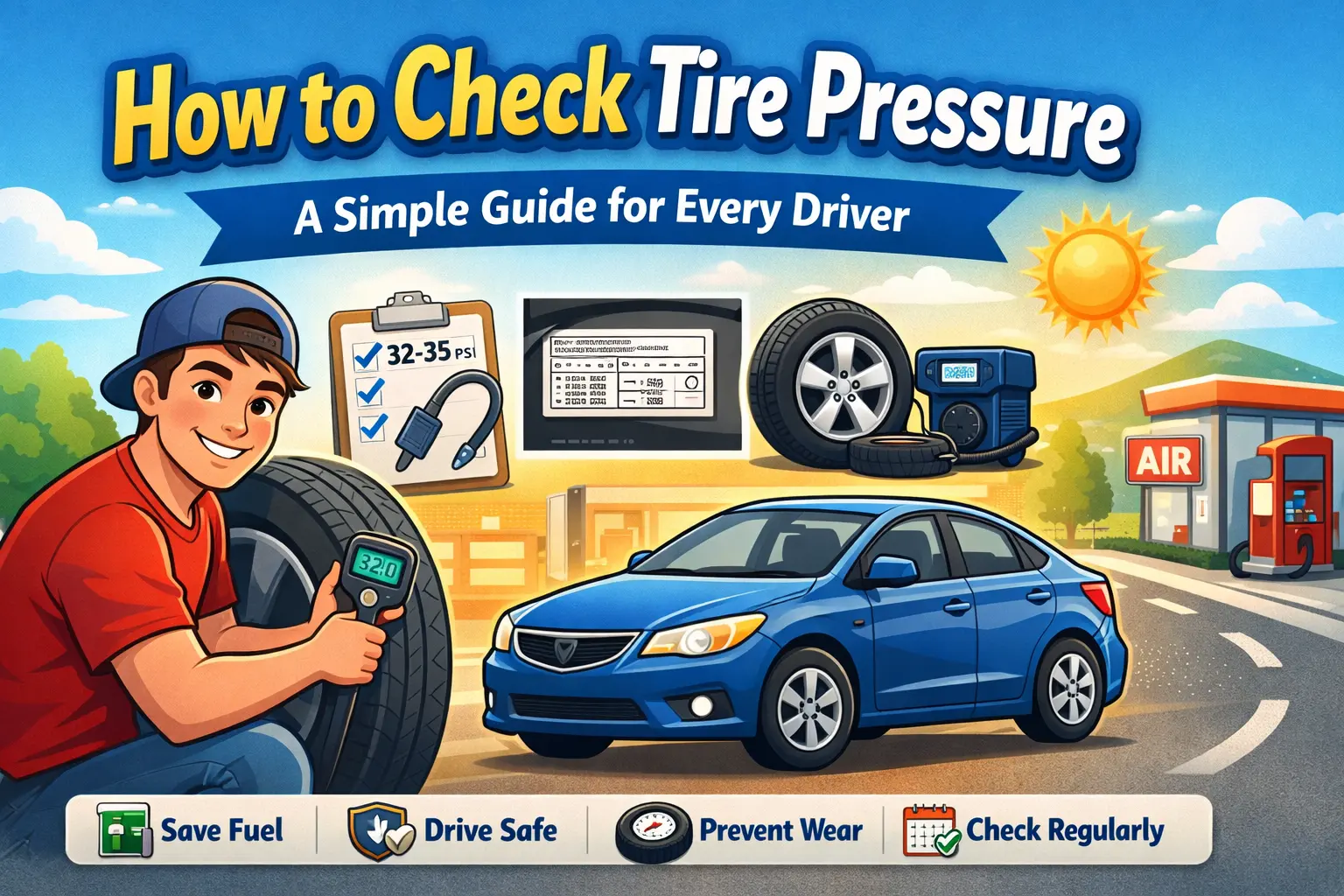
Keeping your tires at the right pressure is one of the easiest ways to stay safe on the road. Yet many people forget to do it. If you’ve ever wondered how to check tire pressure, you’re not alone. It’s a small task, but it makes a big difference.
In this guide, I’ll walk you through everything in a simple way. You’ll learn step-by-step methods, even if you don’t have tools. I’ll also share real-life tips I’ve learned from experience. By the end, you’ll feel confident checking your tires anytime.
Why Tire Pressure Matters More Than You Think
Tire pressure is not just a number. It affects how your car drives, how safe you are, and even how much fuel you use. When your tires are too low, they wear out faster. When they are too high, they can lose grip.
I once ignored my tire pressure for months. My car started pulling to one side. When I checked, one tire was very low. Fixing it made the car feel brand new again.
Proper pressure helps your car stay stable. It also improves braking and saves fuel. That’s why learning how to check tire pressure is important for every driver, even beginners.
What Is Tire Pressure?
Tire pressure is the amount of air inside your tires. It is measured in PSI, which means pounds per square inch. Every car has a recommended PSI level.
You can find this number inside your car door or in the manual. It is not the same as the number printed on the tire. That number shows the maximum pressure, not the ideal one.
Here’s a simple table to understand:
| Type of Vehicle | Recommended PSI Range |
|---|---|
| Small cars | 30–35 PSI |
| SUVs | 35–40 PSI |
| Trucks | 40–50 PSI |
Knowing this helps you understand how to check tire pressure correctly and avoid mistakes.
Tools You Need to Check Tire Pressure
Checking tire pressure is easy when you have the right tools. The most common tool is a tire pressure gauge. It is small, cheap, and easy to use.
There are three main types:
| Tool Type | Features |
|---|---|
| Digital gauge | Easy to read, very accurate |
| Dial gauge | Has a needle display |
| Stick gauge | Simple and affordable |
You can also use air pumps at gas stations. Many of them have built-in gauges.
Even though tools help, you can still learn how to check tire pressure without gauge, which we’ll discuss later.
Step-by-Step: How to Check Tire Pressure
Let’s break it down into simple steps. This is the easiest way to learn how to check tire pressure properly.
First, make sure your tires are cold. This means the car hasn’t been driven for a few hours. Warm tires can give wrong readings.
Next, remove the valve cap from the tire. Press the gauge onto the valve firmly. You will hear a small hiss—that’s normal.
Now read the number on the gauge. Compare it with your car’s recommended PSI. If it’s low, add air. If it’s high, release some air.
Repeat this for all four tires. Don’t forget the spare tire if you have one.
How to Check Air Pressure in Tires at Home
You don’t need to visit a mechanic every time. Learning how to check air pressure in tires at home saves time and money.
You can use a portable air compressor. These are easy to use and plug into your car. Some even show the pressure automatically.
I keep one in my trunk. It has helped me many times during long trips. It’s especially useful when gas stations are far away.
Here’s a quick checklist:
| Step | Action |
|---|---|
| 1 | Check recommended PSI |
| 2 | Attach gauge or compressor |
| 3 | Read pressure |
| 4 | Adjust as needed |
Doing this regularly helps you master how to check tire pressure at home.
How to Check Tire Pressure Without Gauge
Sometimes, you don’t have a gauge. In that case, knowing how to check tire pressure without gauge can still help.
Press your hand on the tire. If it feels too soft, it may be underinflated. If it feels very hard, it might be overinflated.
You can also look at the tire shape. A flat bottom means low pressure. A rounded shape is usually correct.
This method is not very accurate, but it can help in emergencies. Always use a proper gauge when possible.
How Often to Check Tire Pressure
Many people ask, how often to check tire pressure? The answer is simple—at least once a month.
You should also check it before long trips. Weather changes can affect tire pressure too. Cold weather lowers pressure, while heat increases it.
I make it a habit to check mine every two weeks. It takes only a few minutes but gives peace of mind.
Here’s a simple schedule:
| Situation | When to Check |
|---|---|
| Regular driving | Once a month |
| Before long trips | Always |
| Seasonal changes | At least once |
This habit helps you stay safe and keeps your tires in good shape.
How to Check Tire Pressure on Honda Civic
If you drive a Honda Civic, you might wonder how to check tire pressure on Honda Civic specifically.
The process is the same as other cars, but the recommended PSI is usually around 32–35. You can find the exact number inside the driver’s door.
Some newer models have a Tire Pressure Monitoring System (TPMS). This system alerts you when pressure is low.
Still, manual checks are important. Sensors can sometimes give delayed alerts. Learning how to check tire pressure manually ensures accuracy.
Common Mistakes to Avoid
Even simple tasks can go wrong. Here are some common mistakes people make:
- Checking tires when they are hot
- Using the wrong PSI number
- Ignoring one tire
- Forgetting the spare tire
I once checked my tires after a long drive. The reading was higher than normal. I almost released air, which would have been a mistake.
Avoiding these errors helps you get the correct results every time.
Signs Your Tire Pressure Is Wrong
Your car often gives signs when something is wrong. You just need to notice them.
If your car pulls to one side, the pressure may be uneven. If your steering feels heavy, your tires might be low.
Other signs include:
- Uneven tire wear
- Poor fuel economy
- Vibrations while driving
Recognizing these signs makes it easier to know when to check your tires.
Benefits of Maintaining Proper Tire Pressure
Keeping the right pressure has many benefits. It improves safety, saves fuel, and extends tire life.
Here’s a quick overview:
| Benefit | Description |
|---|---|
| Safety | Better grip and control |
| Fuel efficiency | Less resistance, saves fuel |
| Tire lifespan | Reduces wear and tear |
Learning how to check tire pressure regularly helps you enjoy all these benefits.
Seasonal Tire Pressure Tips
Weather plays a big role in tire pressure. In winter, pressure drops quickly. In summer, it rises.
For every 10°C drop in temperature, tire pressure can decrease by about 1–2 PSI. That’s why checking often is important.
During winter, check your tires more frequently. In summer, avoid overinflation.
These small adjustments keep your tires performing well all year.
Real-Life Tip: Make It a Habit
The easiest way to stay consistent is to build a habit. Pair tire checks with something you already do.
For example, check your tires when you refuel your car. It only takes a few minutes.
I started doing this, and now I never forget. It’s a simple routine that keeps my car safe.
FAQs About Tire Pressure
1. How do I know the correct tire pressure for my car?
Check the sticker inside the driver’s door or your car manual. That number is the recommended PSI.
2. Can I drive with low tire pressure?
It’s not safe. Low pressure can damage tires and reduce control.
3. Is it okay to slightly overinflate tires?
No, overinflation reduces grip and can make tires wear unevenly.
4. How long does it take to check tire pressure?
It usually takes less than five minutes for all four tires.
5. Do I need to check new tires?
Yes, even new tires can lose pressure over time.
6. What is the easiest way to learn how to check tire pressure?
Use a digital gauge. It’s simple and gives accurate readings.
Conclusion: Take Control of Your Safety
Learning how to check tire pressure is one of the simplest ways to stay safe on the road. It doesn’t take much time, but the benefits are huge.
From better fuel savings to longer tire life, the advantages are clear. Plus, it gives you confidence as a driver.
Start today. Check your tires this week and make it a habit. Once you do it a few times, it becomes second nature.
Your car—and your safety—will thank you.