
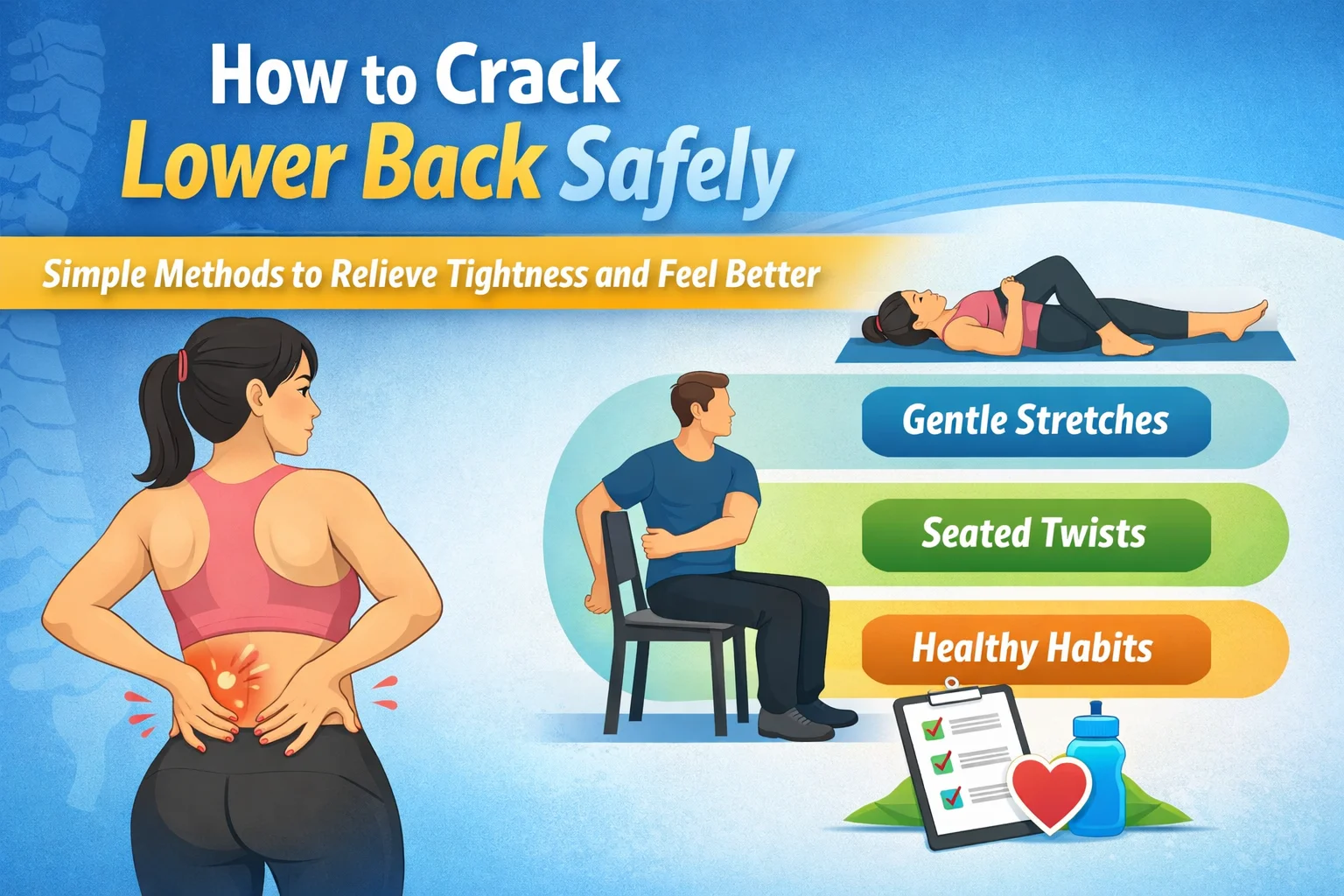
Many people feel tightness in their lower back. It can happen after long sitting, heavy work, or poor posture. That tight feeling often makes people want relief right away. This is why many search for how to crack lower back safely at home. The small popping sound can feel good and release pressure. But it is important to do it the right way.
This guide explains everything in simple words. You will learn safe methods, helpful stretches, and warning signs to watch for. You will also find easy tips to keep your back healthy every day. The goal is not just to crack your back. The goal is to feel better and stay safe. By the end, you will know when it helps, when it does not, and how to protect your spine for the long term.
Why People Want to Crack Their Lower Back
Lower back tightness is very common. Many people sit for long hours at work or school. Others lift heavy items or sleep in poor positions. These habits can make muscles stiff. When the joints feel stuck, people try to release pressure by cracking their back.
The popping sound comes from gas bubbles in the joints. When you move or twist, the joint opens slightly. This releases pressure and creates the sound. It does not mean bones are breaking. It is usually harmless when done gently. That is why many people look for how to crack your lower back when they feel stiff.
Still, cracking your back too often can become a habit. Your body may depend on it for relief. It is better to fix the root cause, like poor posture or weak muscles. Understanding why your back feels tight helps you choose safer solutions.
Is It Safe to Crack Your Lower Back?
In many cases, cracking your back is safe. It can reduce pressure and improve movement. But safety depends on how you do it. Gentle stretching is usually fine. Sudden force or strong twisting can cause injury.
If you feel mild stiffness, learning how to crack lower back pain safely can help. But sharp pain is different. Pain that travels down your leg may signal nerve problems. In that case, cracking your back may make it worse.
Here is a simple table to understand safe and unsafe situations:
| Situation | Safe to Crack? | Reason |
|---|---|---|
| Mild stiffness | Yes | Muscles are tight |
| After long sitting | Yes | Joints need movement |
| Sharp pain | No | Could be injury |
| Numbness or tingling | No | Possible nerve issue |
| Recent accident | No | Risk of damage |
Always listen to your body. Pain is a warning sign. Relief should feel gentle, not forced.
Common Causes of Lower Back Tightness
Lower back stiffness does not happen without a reason. Many daily habits can cause it. Identifying the cause helps you fix the problem faster.
Here are the most common causes:
| Cause | Description | Example |
|---|---|---|
| Sitting too long | Muscles become weak and tight | Office work |
| Poor posture | Spine stays in wrong position | Slouching |
| Heavy lifting | Strains muscles | Carrying boxes |
| Lack of exercise | Muscles lose strength | No physical activity |
| Stress | Muscles stay tense | Busy lifestyle |
When you understand the cause, you can choose the right solution. Sometimes the answer is not learning how to crack my lower back. Sometimes the answer is better posture or more movement.
Signs You Should Not Crack Your Back
Your body sends signals when something is wrong. Ignoring these signals can lead to injury. It is important to know when cracking your back is unsafe.
Watch for these warning signs:
- Sharp or sudden pain
- Pain after a fall
- Numbness in legs
- Weakness in muscles
- Loss of balance
- Fever with back pain
If you notice these signs, stop immediately. Seek medical advice before trying any movement. Cracking your back should never replace proper care.
Safety always comes first. Relief should not cause more harm.
How to Crack Lower Back Safely at Home
Many people want quick relief. The good news is that safe methods exist. These methods use gentle movement, not force. They help release pressure without hurting your spine.
Here are the basic safety rules:
- Move slowly
- Breathe deeply
- Avoid sudden twisting
- Stop if pain appears
- Use gentle stretches
When done correctly, learning how to crack lower back can reduce stiffness and improve comfort. But remember, it is not a cure for serious pain. It is simply a way to relax tight joints.
Consistency matters more than force. Gentle daily movement keeps your back healthy.
Gentle Stretches That Help Release Pressure
Stretching is one of the safest ways to relieve back tightness. It improves blood flow and relaxes muscles. Many people feel a natural pop during stretching. This is normal and often harmless.
Here are effective stretches:
| Stretch Name | How to Do It | Benefit |
|---|---|---|
| Knee-to-Chest | Pull one knee toward chest | Relieves pressure |
| Cat-Cow Stretch | Arch and round your back | Improves flexibility |
| Child’s Pose | Sit back on heels | Reduces tension |
| Pelvic Tilt | Tilt hips forward and back | Strengthens core |
These stretches are simple. They can be done at home without equipment. They are safer than sudden twisting movements.
Regular stretching may reduce the need to search for how to crack lower back pain in the future.
Step-by-Step Sitting Method to Crack Your Lower Back
This method is simple and gentle. It works well after long sitting. Many people find relief using this technique.
Follow these steps:
- Sit on a chair with feet flat.
- Keep your back straight.
- Place your right hand on the left knee.
- Slowly twist your body to the left.
- Hold for 10 seconds.
- Repeat on the other side.
You may hear a small pop. That is normal. The movement opens the joints and releases pressure.
This is one of the easiest ways to learn how to crack your lower back safely. It uses natural motion instead of force.
Always move slowly. Speed increases risk.
Standing Twist Method for Quick Relief
The standing twist is another popular method. It works well when your back feels stiff after standing or walking.
Start by standing upright. Keep your feet shoulder-width apart. Place your hands on your hips. Slowly twist your upper body from side to side. Do not push hard. Let the movement stay gentle.
You may feel a release in the joints. This method helps improve mobility. It also increases blood flow to the spine.
Many people use this method when searching for how to crack lower back quickly. It is simple and requires no equipment.
Still, moderation is key. Too much twisting can strain muscles. Use gentle movement instead of force.
How to Crack Lower Back Above Buttocks Area
The area just above the buttocks is called the sacroiliac region. This joint connects the spine to the pelvis. It often becomes tight after sitting for long periods.
To release pressure in this area, try the knee-drop stretch. Lie on your back with knees bent. Slowly drop both knees to one side. Keep shoulders flat on the floor. Hold for 15 seconds. Then switch sides.
This movement gently stretches the lower spine. It is a safe way to learn how to crack lower back above buttocks without risk.
Pain in this area is common. It often comes from weak core muscles. Strengthening your core can prevent future stiffness.
Tips to Prevent Lower Back Pain
Prevention is always better than treatment. Small daily habits can protect your spine. They reduce stiffness and improve comfort.
Here are simple prevention tips:
- Sit with straight posture
- Use a supportive chair
- Lift objects carefully
- Stay active every day
- Stretch regularly
- Drink enough water
These habits keep joints flexible. They also reduce pressure on muscles. Many people notice less need to search for how to crack lower back pain after improving daily routines.
Healthy habits build a strong foundation. They protect your back for years.
Daily Habits for a Healthy Spine
A healthy spine depends on consistent care. Small actions each day make a big difference. You do not need expensive equipment or special training.
Here is a simple daily routine:
| Time | Activity | Benefit |
|---|---|---|
| Morning | Light stretching | Improves flexibility |
| Midday | Short walk | Reduces stiffness |
| Evening | Core exercises | Strengthens muscles |
| Before bed | Gentle stretch | Relaxes spine |
Following this routine helps prevent tightness. It also improves posture and energy levels. Many people feel fewer aches after just one week.
When your body stays active, the need to learn how to crack my lower back becomes less frequent.
When to See a Doctor
Not all back problems are minor. Some require professional care. Knowing when to seek help can prevent serious issues.
See a doctor if:
- Pain lasts more than two weeks
- Pain spreads to legs
- You feel numbness
- You lose strength
- Pain follows an accident
Doctors can check for injuries or nerve problems. They may suggest therapy or exercises. Early treatment often leads to faster recovery.
Never ignore persistent pain. Your health is worth attention.
Frequently Asked Questions (FAQs)
1. Is it bad to crack your lower back every day?
Cracking your back sometimes is usually safe. Doing it many times each day may cause joint irritation. It is better to stretch and strengthen muscles instead.
2. Why does my back feel better after cracking?
The popping sound releases pressure in the joints. It can improve movement and reduce tension. This creates a feeling of relief.
3. Can cracking your back cause damage?
Yes, if done with force. Sudden twisting can strain muscles or ligaments. Gentle movement is safer.
4. What is the safest way to crack your lower back?
Gentle stretching is the safest method. Movements like knee-to-chest or seated twists work well. They reduce pressure without risk.
5. Should I crack my back if it hurts?
No. Pain is a warning sign. Stop and seek medical advice if pain continues.
6. How often should I stretch my lower back?
Stretching once or twice daily is enough for most people. Regular stretching keeps muscles flexible and healthy.
Conclusion: Take Care of Your Back Every Day
Your lower back supports your entire body. It helps you stand, walk, and move. When it feels tight, relief is important. Learning how to crack lower back safely can help reduce stiffness. But long-term health depends on daily habits.
Simple actions like stretching, walking, and good posture protect your spine. They reduce pain and improve comfort. Most importantly, they keep your body strong.