
Folding a letter may sound easy, but doing it the right way matters more than you think. If you want to send a job application, business document, or formal request, presentation is key. A neatly folded letter shows care, respect, and professionalism. In this complete guide, you’ll learn how to fold an official letter step by step in a simple and clear way.
I’ve helped prepare documents for interviews and formal submissions, and one small detail always stands out—how the letter is folded. A messy fold can ruin a great document. But a clean fold makes a strong first impression. Let’s walk through everything you need to know so your letter always looks perfect.
Why Folding an Official Letter Matters
When you send a formal letter, you are not just sharing information—you are showing your professionalism. The way you fold your document can say a lot about you. A clean, proper fold shows attention to detail. It tells the reader you care about how your message is presented.
Imagine receiving a wrinkled or poorly folded letter. It feels careless. But a well-folded letter looks organized and respectful. This is especially important when applying for jobs, sending legal documents, or communicating with companies.
Learning how to properly fold an official letter is a small skill, but it has a big impact. It helps you stand out and ensures your letter fits perfectly into the envelope without damage.
Standard Sizes for Official Letters
Before you fold anything, it helps to know the common paper sizes used in official communication. This ensures your folds match the envelope and look professional.
| Paper Size | Dimensions | Common Use |
|---|---|---|
| A4 | 8.27 × 11.7 inches | International business letters |
| Letter | 8.5 × 11 inches | US business letters |
| Legal | 8.5 × 14 inches | Contracts and legal papers |
Most official letters use A4 or Letter size. The folding method stays mostly the same for both. Always check your envelope size before folding.
Types of Envelopes and Matching Folds
Choosing the right envelope is just as important as folding your letter correctly. Different envelopes require different folding styles.
| Envelope Type | Size | Best Fold Style |
|---|---|---|
| DL Envelope | 110 × 220 mm | Tri-fold |
| C5 Envelope | 162 × 229 mm | Half-fold |
| C4 Envelope | 229 × 324 mm | No fold |
If you use a DL envelope, the tri-fold method is the most common. If you use a larger envelope like C4, you don’t need to fold the letter at all.
The Most Common Method: Tri-Fold Technique
The tri-fold is the standard method when learning how to fold an official letter. It is simple and widely used in business settings.
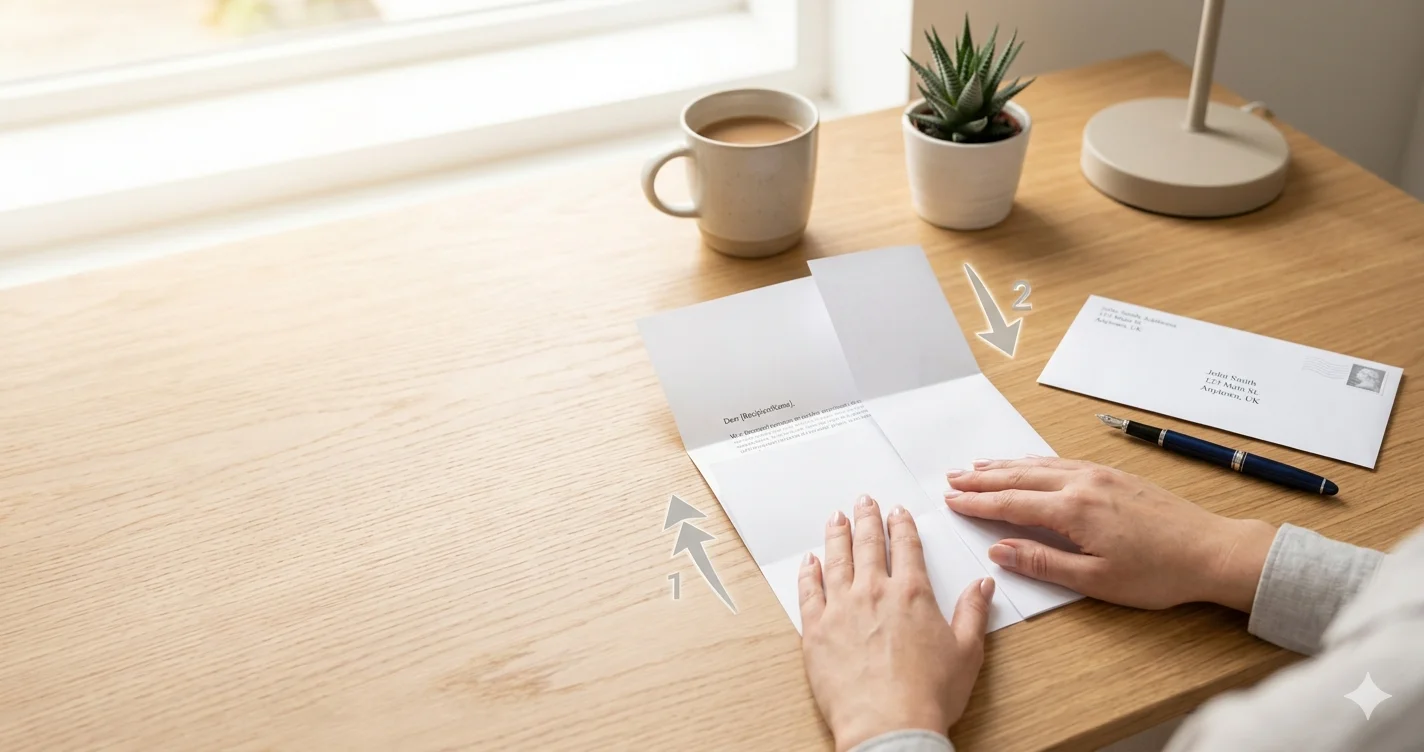
Start by placing your letter face up on a clean, flat surface. Fold the bottom third of the paper upward. Make sure the edge is straight. Then fold the top third downward so it covers the bottom section.
The result is three equal sections. This fold fits perfectly into a standard DL envelope. The letter opens smoothly, making it easy to read.
This method is popular because it keeps the content protected and looks neat when opened.
Step-by-Step Guide to Folding an Official Letter
Let’s break down the process into simple steps so anyone can follow.
| Step | Action | Tip |
|---|---|---|
| 1 | Place letter face up | Use a flat surface |
| 2 | Fold bottom third up | Align edges carefully |
| 3 | Fold top third down | Keep folds even |
| 4 | Press folds gently | Avoid sharp creases |
| 5 | Insert into envelope | Keep top fold facing outward |
Following these steps ensures your letter looks clean and professional every time.
Half-Fold Method for Larger Envelopes
If you are using a bigger envelope, the half-fold method works best. This method is also useful for thicker documents.
Place your letter flat and fold it in half horizontally. Align the edges carefully and press lightly. This creates a simple and neat fold.
This method is often used for certificates, contracts, or documents that should not have too many creases. It keeps the paper in better condition.
Knowing how to properly fold an official letter using different methods gives you flexibility in any situation.
When Not to Fold Your Letter
Sometimes, folding is not the best option. If your document is important or needs to stay perfectly flat, avoid folding it.
Use a large envelope like C4 so the paper stays straight. This is common for legal documents, resumes, and certificates.
A flat document looks more formal and prevents any damage. Always consider the purpose of your letter before deciding how to fold it.
Common Mistakes to Avoid
Even a simple task like folding can go wrong if you’re not careful. Here are some mistakes people often make:
| Mistake | Why It’s Bad | Fix |
|---|---|---|
| Uneven folds | Looks messy | Measure sections before folding |
| Sharp creases | Damages paper | Press gently |
| Folding wrong side | Looks unprofessional | Keep text inside |
| Over-folding | Hard to read | Use proper method |
Avoiding these mistakes will improve how your letter looks and feels.
Tips for a Perfect Fold Every Time
Getting a clean fold is easier with a few simple tricks. Always use a flat, clean surface when folding your letter. This helps you align edges properly.
Use your fingers or a ruler to press the fold gently. Do not rush. Take your time to make sure everything lines up.
If you want extra precision, lightly mark fold lines with a pencil. This is helpful when you are learning how to fold an official letter for the first time.
Practice makes perfect. The more you do it, the better your folds will look.
Folding Letters for Job Applications
When sending a job application, presentation matters a lot. Employers notice small details. A neatly folded letter shows professionalism.
Use the tri-fold method for standard envelopes. Make sure your cover letter and resume are aligned properly. Avoid folding too many times, as it can make the document look messy.
From my experience, a clean and organized letter often creates a better first impression than a poorly handled one.
Folding Letters for Business Communication
In business settings, consistency is important. Companies often follow standard formats for letters and documents.
The tri-fold method is widely used in offices. It fits standard envelopes and keeps documents organized. Always ensure the company logo or letterhead is visible when opened.
Learning how to properly fold an official letter helps maintain a professional image in business communication.
Tools That Can Help You Fold Better
You don’t need special tools, but a few items can help improve your results.
| Tool | Purpose |
|---|---|
| Ruler | Helps create straight folds |
| Bone folder | Smooths folds neatly |
| Flat surface | Ensures even alignment |
These tools are optional but useful if you want a polished finish.
How Folding Affects First Impressions
First impressions matter, especially in formal communication. A well-folded letter shows care and attention.
When someone opens your letter, they notice how easy it is to read. A clean fold makes the document look professional and organized.
On the other hand, a poorly folded letter can distract from your message. It may even create a negative impression.
That’s why learning how to fold an official letter correctly is so important.
Frequently Asked Questions (FAQs)
1. What is the best way to fold an official letter?
The tri-fold method is the most common and professional way. It fits standard envelopes and looks neat.
2. Can I fold a letter more than three times?
It’s not recommended. Too many folds can make the letter look messy and hard to read.
3. Should the text face inside or outside?
The text should always face inside to protect it and maintain a clean look.
4. Is it okay to send an unfolded letter?
Yes, if you use a large envelope. This is often better for important documents.
5. How do I avoid uneven folds?
Measure sections carefully and use a ruler for guidance if needed.
6. Does folding really matter in professional settings?
Yes, it does. A neat fold shows professionalism and attention to detail.
Final Thoughts
Learning how to fold an official letter may seem like a small skill, but it plays a big role in professional communication. A well-folded letter shows respect, care, and attention to detail. It helps your message stand out and creates a positive impression.
Whether you are sending a job application, business document, or formal request, always take a moment to fold your letter properly. Use the right method, avoid common mistakes, and keep your presentation clean.
Now that you know how to properly fold an official letter, try practicing it yourself. With a little effort, you’ll master this simple but important skill and make every letter you send look polished and professional.