
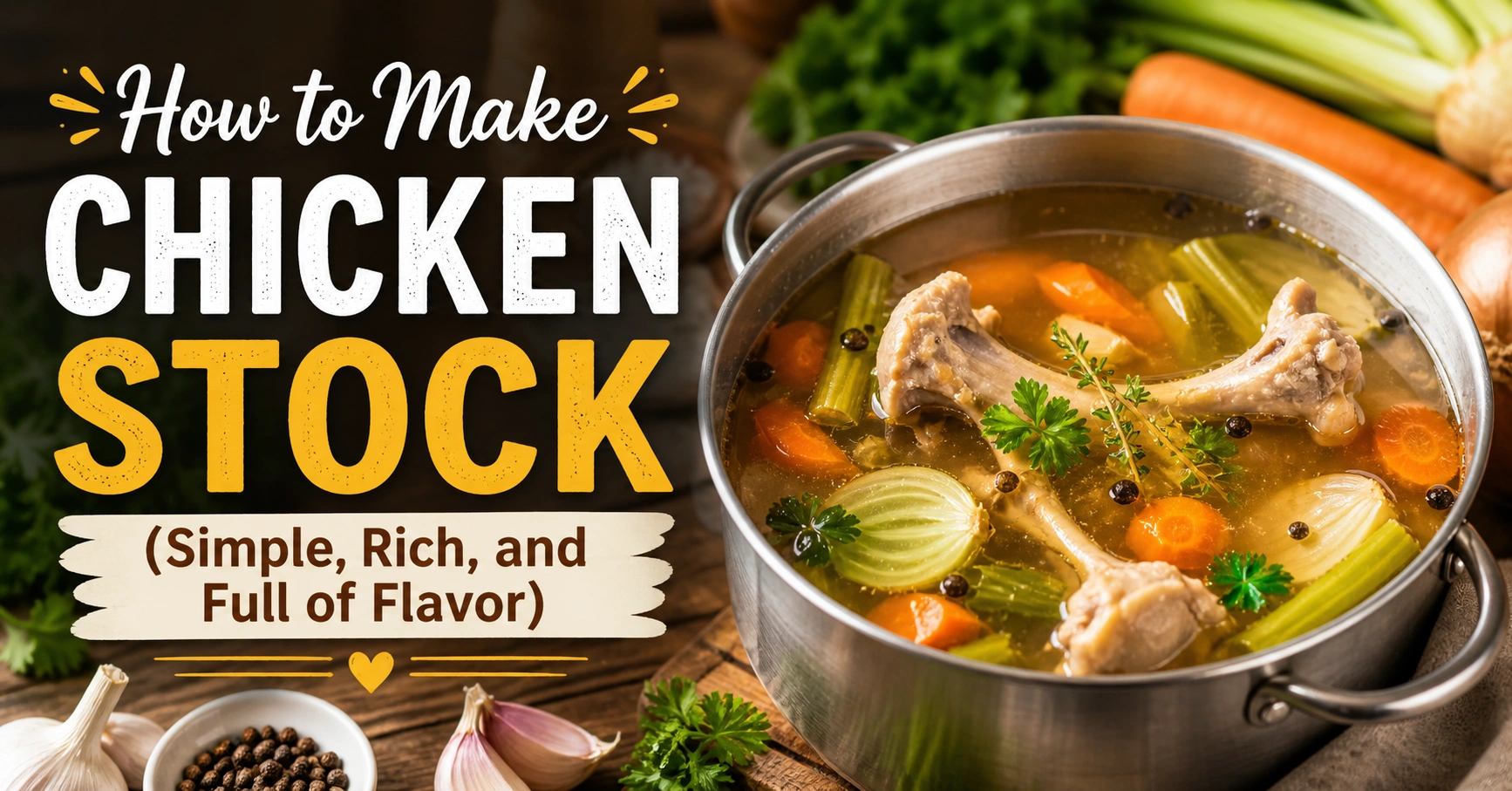
Learning how to make chicken stock at home is one of the best kitchen skills you can build. It may sound fancy, but it is actually very easy. You only need a few simple ingredients and some time. The result is a warm, rich liquid that adds deep flavor to soups, rice, sauces, and more. Once you try homemade stock, you may never go back to store-bought versions.
This guide will walk you through everything step by step. You will learn how to make chicken stock from bones, from a leftover carcass, or even using bouillon when you are short on time. I will also share tips from real kitchen experience to help you avoid common mistakes. Let’s get started and make something truly comforting.
What Is Chicken Stock and Why Does It Matter
Chicken stock is a flavorful liquid made by simmering chicken parts with water, vegetables, and spices. It is different from broth because stock usually uses bones, which give it a richer taste and thicker texture.
When you learn how to make stock from chicken, you unlock a powerful base for cooking. It improves soups, sauces, and even simple dishes like rice. Slow cooking draws nutrients and flavor from the bones and vegetables.
Homemade stock also gives you control. You can reduce salt, avoid preservatives, and use fresh ingredients. Many home cooks say their meals taste “restaurant quality” once they switch to homemade stock. That’s because fresh stock has a deep, natural flavor that packaged options often lack.
Ingredients You Need for the Best Chicken Stock
To master how to make chicken stock, start with the right ingredients. The good news is you don’t need anything fancy.
Here’s a simple ingredient list:
| Ingredient | Amount | Purpose |
|---|---|---|
| Chicken bones | 1–2 kg | Main flavor base |
| Water | 3–4 liters | Cooking liquid |
| Onion | 1 large | Sweetness and depth |
| Carrots | 2 medium | Natural sweetness |
| Celery | 2 stalks | Fresh aroma |
| Garlic | 3–4 cloves | Extra flavor |
| Bay leaves | 2 | Mild herbal note |
| Peppercorns | 1 tsp | Gentle spice |
You can also add herbs like parsley or thyme. If you are learning how to make chicken stock from bones, roasted bones will give even better flavor.
How to Make Chicken Stock Step by Step
Making stock is simple if you follow a clear process. Here’s the easiest method:
- Place chicken bones in a large pot
- Add chopped vegetables
- Pour in water to cover everything
- Bring to a gentle boil
- Reduce heat and simmer slowly
Let it cook for 3 to 6 hours. Skim foam from the top for a cleaner taste. Strain the liquid at the end.
This method works whether you are learning how to make stock chicken or using leftover parts. The slow simmer is key. It pulls out flavor without making the stock cloudy.
How Long to Make Chicken Stock for Best Results
A common question is how long to make chicken stock. The answer depends on your goal.
| Cooking Time | Result |
|---|---|
| 1–2 hours | Light flavor |
| 3–4 hours | Balanced, rich stock |
| 5–6 hours | Deep, strong flavor |
| 8+ hours | Very intense (can be heavy) |
For most home cooking, 3–4 hours is perfect. If you are using bones, longer cooking helps extract collagen. This gives your stock a silky texture when cooled.
How to Make Chicken Stock from Bones
If you want deep flavor, learn how to make chicken stock from bones. This method is very popular among chefs.
First, roast the bones in the oven at 200°C for about 30 minutes. This step adds a rich, golden flavor. Then follow the basic simmer method.
Bones contain collagen, which breaks down during cooking. This gives your stock a slightly thick texture. When chilled, it may even turn jelly-like. That’s a sign of a high-quality stock.
How to Make Chicken Stock from a Carcass
After eating a whole chicken, don’t throw away the leftovers. Learning how to make chicken stock from carcass saves money and reduces waste.
Simply place the leftover bones, skin, and bits into a pot. Add vegetables and water, then simmer as usual.
This method works great after a family meal. It turns scraps into something valuable. Many home cooks say this is the most satisfying way to make stock.
How to Make Chicken Stock from Rotisserie Chicken
Rotisserie chicken is a great shortcut. If you are wondering how to make chicken stock from rotisserie chicken, the process is almost the same.
Remove the meat first. Then use the remaining bones and skin. Because rotisserie chicken is already seasoned, your stock will have extra flavor.
Be careful with salt, though. Store-bought rotisserie chicken often contains added salt. Taste your stock before adding more seasoning.
How to Make Chicken Stock with Bouillon
Short on time? You can still learn how to make chicken stock with bouillon.
| Ingredient | Amount |
|---|---|
| Water | 1 liter |
| Chicken bouillon | 1 cube or 1 tsp |
| Optional veggies | Small amount |
Dissolve the bouillon in hot water. Add vegetables if you have them. Simmer for 20–30 minutes.
This method is quick but less rich. Still, it works well when you need stock fast. Many people use it for weekday cooking.
Tips to Improve Flavor and Quality
Making great stock is easy, but small tips make a big difference.
- Always simmer, never boil hard
- Skim foam for a clean taste
- Use cold water at the start
- Avoid adding too much salt early
When learning how to make stock from chicken, patience is your best tool. Slow cooking brings out the best flavor.
One personal tip: I often freeze vegetable scraps like carrot peels and onion ends. When it’s time to make stock, I use them. It saves money and boosts flavor.
How to Store and Use Chicken Stock
Once you know how to make chicken stock, proper storage is important.
| Storage Method | Duration |
|---|---|
| Refrigerator | 3–4 days |
| Freezer | 3–6 months |
Let the stock cool before storing. Use airtight containers. You can also freeze it in ice cube trays for small portions.
Homemade stock is very versatile. Use it in soups, rice, pasta, or sauces. It adds depth to almost any dish.
How to Make Gravy Using Chicken Stock
Now that you have stock, let’s use it. Learning how to make gravy using chicken stock is simple.
Melt butter in a pan. Add flour and cook for a minute. Slowly pour in chicken stock while stirring. Let it thicken.
You can add salt, pepper, or herbs for extra flavor. This gravy pairs well with chicken, mashed potatoes, or rice.
Common Mistakes to Avoid
Even simple recipes can go wrong. Here are common mistakes:
- Boiling too hard (makes stock cloudy)
- Adding too much salt early
- Not skimming foam
- Using too little water
When learning how to make chicken stock, focus on gentle cooking and balance. These small details improve your results a lot.
Health Benefits of Homemade Chicken Stock
Homemade stock is not just tasty. It also has health benefits.
It contains minerals from bones and vegetables. It is easy to digest and comforting when you are sick. Many people use it as a base for healthy meals.
When you make stock at home, you avoid artificial additives. This makes it a cleaner and more natural option.
FAQs About How to Make Chicken Stock
1. Can I make chicken stock without bones?
Yes, but it will be lighter. Bones give deeper flavor and texture.
2. How long to make chicken stock for best taste?
3 to 4 hours is ideal for most recipes.
3. Can I reuse bones for another batch?
Yes, but the second batch will be weaker.
4. Is chicken stock the same as broth?
Not exactly. Stock uses bones, broth uses meat.
5. Can I freeze chicken stock?
Yes, it freezes very well for months.
6. How do I fix bland chicken stock?
Simmer it longer or add herbs and spices.
Final Thoughts: Start Making Your Own Chicken Stock Today
Now you know exactly how to make chicken stock in different ways. Whether you use bones, a carcass, or bouillon, the process is simple and rewarding. Homemade stock adds rich flavor to your cooking and helps you use ingredients wisely.
Start with a basic batch today. Try different methods and find what works best for you. Once you get comfortable, you will see how much better your meals taste.
If you found this guide helpful, try making a batch this week. Your kitchen will smell amazing, and your dishes will taste even better.