
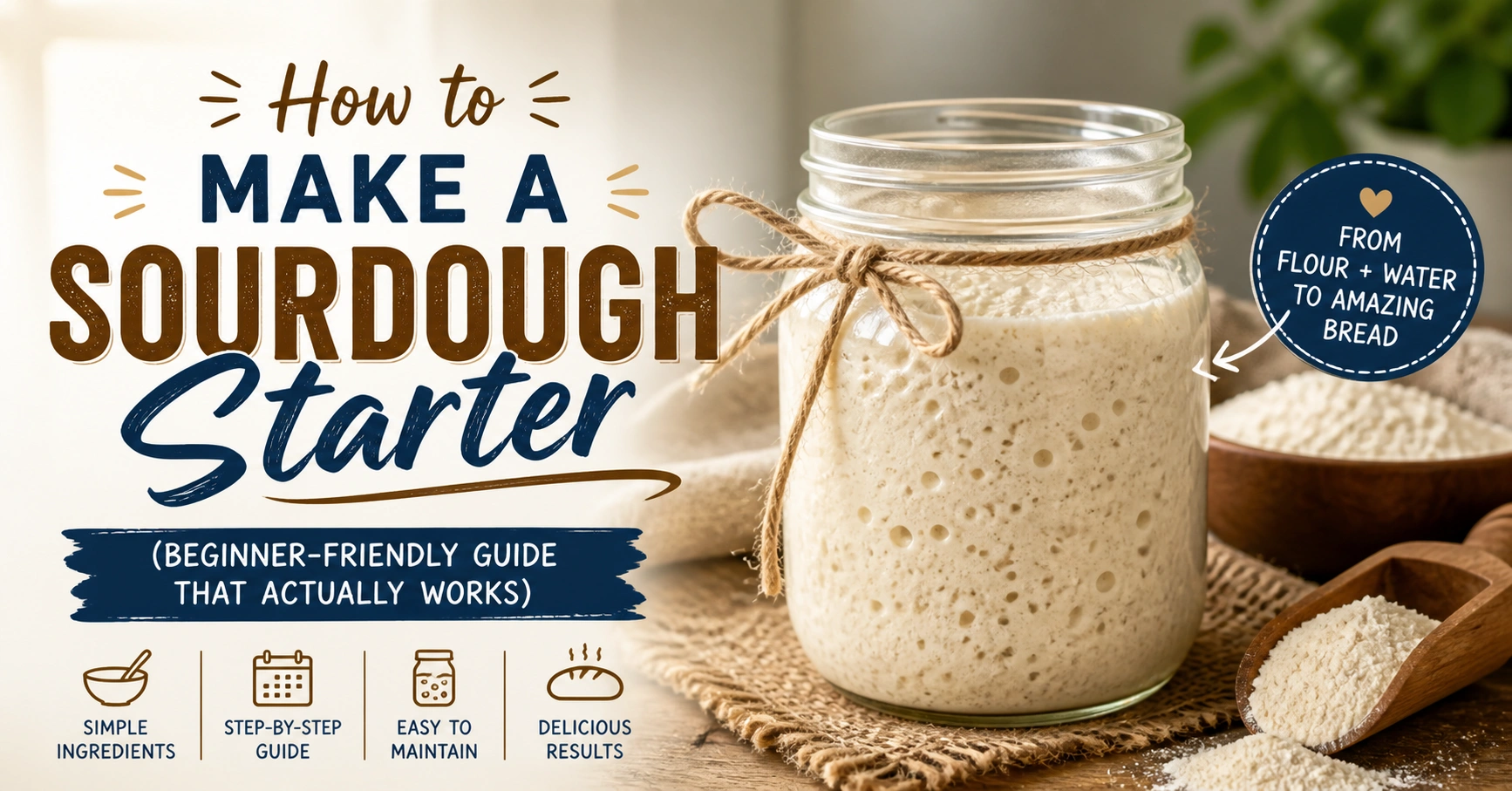
Making your own sourdough at home feels magical. You mix simple ingredients, wait a few days, and suddenly you have something alive. That’s the beauty of learning how to make a sourdough starter. It’s just flour and water, but it grows into a natural yeast that helps bread rise.
In this guide, I’ll show you how to make a sourdough starter from scratch in a simple, stress-free way. No fancy tools needed. No confusing steps. Just clear instructions anyone can follow.
I’ve made starters many times, and I’ve had failures too. Sometimes it smells weird. Sometimes it grows slow. That’s normal. I’ll share real tips so you avoid common mistakes.
By the end, you’ll know exactly how to make a starter for sourdough bread, how to care for it, and how to use it. Let’s begin.
What Is a Sourdough Starter?
A sourdough starter is a mix of flour and water that captures wild yeast from the air. Over time, it starts to bubble and grow. That means it’s alive and ready to bake bread.
When you learn how to make a sourdough starter, you are not adding yeast from a packet. Instead, you let nature do the work. The wild yeast feeds on the flour and creates gas. That gas makes your bread soft and fluffy.
Starters also add flavor. That slightly tangy taste in sourdough bread comes from natural bacteria. It’s what makes sourdough special.
Many beginners think it’s hard. But honestly, it’s just patience and routine. Once you understand the process, it becomes simple and fun.
Why Make a Sourdough Starter at Home?
Making your own starter saves money and gives better taste. Store-bought bread can’t match fresh sourdough made at home.
When you learn how to make a sourdough starter from scratch, you control everything. You choose the flour, water, and feeding schedule. That means healthier bread with fewer additives.
It’s also rewarding. Watching your starter grow each day feels exciting. It’s like taking care of a tiny pet.
Another reason is flexibility. Once your starter is ready, you can bake bread anytime. You don’t depend on store yeast.
Here’s a quick comparison:
| Homemade Starter | Store Yeast |
|---|---|
| Natural and fresh | Processed |
| Better flavor | Mild taste |
| Long-lasting | Short shelf life |
| Fun to maintain | No interaction |
Ingredients You Need
The best part of learning how to make a starter for sourdough is how simple it is.
You only need two ingredients:
| Ingredient | Amount | Notes |
|---|---|---|
| Flour | 1 cup | Whole wheat works best at start |
| Water | ½ cup | Use filtered if possible |
That’s it. No yeast packet needed.
Whole wheat flour helps the starter grow faster because it has more nutrients. After a few days, you can switch to all-purpose flour if you want.
Avoid chlorinated water if possible. It can slow down growth. If you only have tap water, let it sit for a few hours before using.
Simple ingredients make this process easy for beginners.
Step-by-Step: How to Make a Sourdough Starter
Now let’s get into the real process of how to make a sourdough starter.
Day 1:
Mix 1 cup flour and ½ cup water in a jar. Stir well until smooth. Cover loosely.
Day 2:
You may see no change. That’s normal. Stir once.
Day 3:
You might see small bubbles. That’s a good sign. Discard half and feed again.
Day 4–7:
Keep feeding daily. Discard half, then add fresh flour and water.
Here’s a simple schedule:
| Day | Action |
|---|---|
| 1 | Mix flour + water |
| 2 | Stir |
| 3 | Feed |
| 4–7 | Feed daily |
By day 5–7, your starter should double in size after feeding. That means it’s ready.
How Long Does It Take to Make a Sourdough Starter?
Most people ask, how long does it take to make a sourdough starter?
The answer is usually 5 to 7 days. But it can take longer depending on temperature and ingredients.
Warm environments help the starter grow faster. Cold rooms slow it down. If your kitchen is cool, it might take up to 10 days.
Don’t rush the process. A strong starter takes time to develop flavor and strength.
Signs your starter is ready:
- It doubles in size within 4–6 hours
- It smells slightly sour, not bad
- It has lots of bubbles
Patience is key when learning how to make a sourdough starter from scratch.
Signs Your Starter Is Healthy
A healthy starter is easy to spot once you know what to look for.
It should smell fresh and slightly tangy. Not rotten or overly sour.
It should also bubble actively. That means the yeast is working.
Here’s a quick guide:
| Healthy Starter | Problem Starter |
|---|---|
| Bubbly | No bubbles |
| Slight sour smell | Bad odor |
| Doubles in size | No growth |
If your starter looks weak, don’t worry. Just keep feeding it regularly. Most starters recover with time.
Understanding this helps you master how to make a sourdough bread starter successfully.
Common Mistakes Beginners Make
When learning how to make a sourdough starter, mistakes are normal.
One common mistake is not feeding regularly. Your starter needs fresh flour to stay active.
Another mistake is using too much water. This can make it too runny and weak.
Also, don’t seal the jar tightly. The starter needs airflow.
Some beginners throw it away too early. That’s a big mistake. Starters often look inactive before they become strong.
From my experience, the biggest issue is impatience. Give it time. Nature works slowly but surely.
How to Store and Maintain Your Starter
Once your starter is ready, you need to take care of it.
If you bake often, keep it at room temperature and feed daily.
If you bake less, store it in the fridge and feed once a week.
Here’s a simple guide:
| Storage | Feeding |
|---|---|
| Room temperature | Daily |
| Refrigerator | Weekly |
Always bring it to room temperature before baking.
Maintaining your starter becomes easy once you get used to it. This is an important part of learning how to make a starter for sourdough bread.
How to Make Sourdough Bread from a Starter
Once your starter is active, you can bake bread.
Learning how to make sourdough bread from a starter is the next exciting step.
Basic process:
- Mix starter, flour, water, and salt
- Let it rise slowly
- Shape the dough
- Bake
The slow rise gives sourdough its unique flavor.
Your starter acts as natural yeast. That’s why it’s so special.
The better your starter, the better your bread.
How to Make a Gluten Free Sourdough Starter
Yes, you can also learn how to make a gluten free sourdough starter.
Instead of wheat flour, use gluten-free options like:
- Rice flour
- Buckwheat flour
- Sorghum flour
The process stays the same. Mix flour and water, then feed daily.
Gluten-free starters may take a bit longer to grow. But they work just as well.
This is great for people with gluten sensitivity.
Can You Make a Sourdough Starter with Yeast?
Some people ask about how to make a sourdough starter with yeast.
Technically, you can add yeast. But it’s not traditional sourdough.
Real sourdough relies on wild yeast. Adding commercial yeast makes it faster but less authentic.
If you want true sourdough flavor, skip the yeast and follow the natural method.
Tips to Make Your Starter Stronger
A strong starter makes better bread.
Here are some helpful tips:
- Use whole wheat flour in early days
- Keep it warm (around 24–27°C)
- Feed at the same time daily
- Use clean containers
These small habits improve your success when learning how to make a sourdough starter.
FAQs
1. How do I know my starter is ready?
It should double in size and have lots of bubbles. It should also smell slightly sour.
2. Can I skip feeding one day?
Yes, but not often. Regular feeding keeps it strong.
3. Why does my starter smell bad?
It may need more feeding. Bad smell means imbalance.
4. Can I use any flour?
Yes, but whole wheat works best in the beginning.
5. Is it normal for liquid to form on top?
Yes, that liquid is called hooch. Just stir or discard it.
6. Can I restart if it fails?
Absolutely. Many people retry when learning how to make a sourdough starter from scratch.
Conclusion
Now you fully understand how to make a sourdough starter at home. It’s simple, natural, and rewarding.
You don’t need special tools or skills. Just flour, water, and patience. Over time, your starter becomes strong and reliable.
Once you master this, you can bake delicious bread anytime. You’ll also gain confidence in your kitchen skills.
Start today. Mix your first batch and watch it grow. There’s nothing quite like baking bread from something you created yourself.
If you found this guide helpful, try making your first loaf next. Your sourdough journey has just begun.