
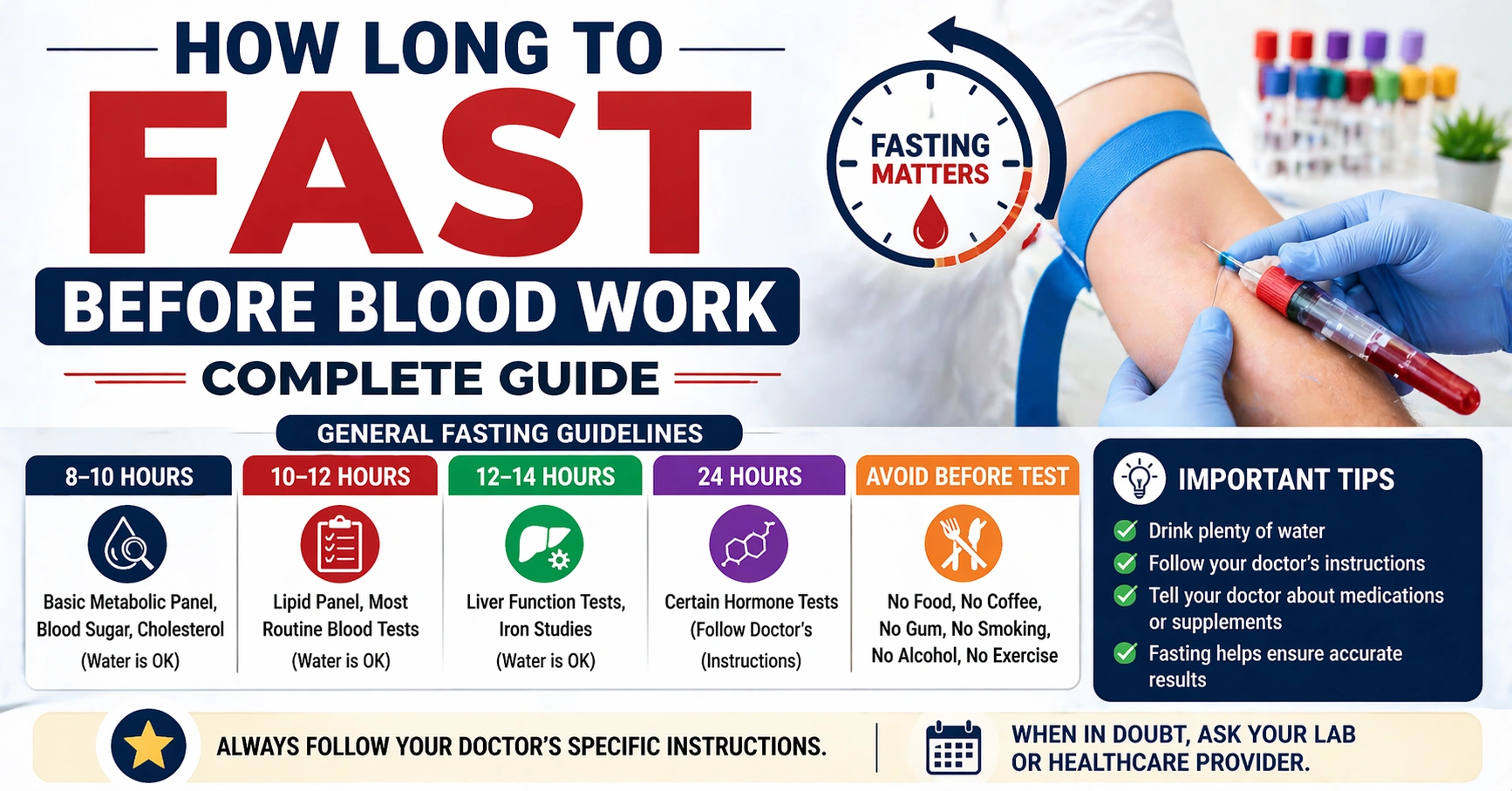
Getting blood tests can feel confusing, especially when you hear the word “fasting.” Many people ask the same question: how long to fast before blood work and why it even matters. If you’ve ever been unsure about when to stop eating or drinking, you’re not alone.
In this simple and helpful guide, you’ll learn exactly what to do before your test. We’ll break everything down in clear steps, using easy words and real-life examples. By the end, you’ll feel confident and prepared for your next lab visit.
Why Fasting Matters Before Blood Tests
Fasting means not eating or drinking anything except water for a set time. It helps your doctor get accurate results.
When you eat, your body changes. Blood sugar rises. Cholesterol levels shift. Even vitamins and minerals can spike or drop. These changes can hide real health issues.
For example, I once had a routine test after breakfast. My sugar looked high. But later, a fasting test showed normal results. That small mistake caused stress and extra testing.
So, fasting gives a clear picture of your health. It removes the “noise” from recent meals. That’s why doctors often stress how long to fast before blood work.
How Long to Fast Before Blood Work (Quick Answer)
Most people need to fast for 8 to 12 hours before blood work.
Here’s a quick overview:
| Test Type | Fasting Time Needed |
|---|---|
| Blood sugar (glucose) | 8–12 hours |
| Cholesterol (lipid) | 9–12 hours |
| Iron tests | 8–12 hours |
| Thyroid tests | Usually no fasting |
Always confirm with your doctor. Some tests don’t need fasting at all.
What Happens If You Don’t Fast Properly?
Not fasting can affect your results in big ways.
Your blood sugar may look higher than normal. Cholesterol numbers can change. Even triglycerides can spike after eating.
This can lead to:
- Wrong diagnosis
- Unnecessary medications
- Repeat testing
Imagine getting told your cholesterol is high, only to find out later it was just your breakfast. That’s why understanding how long to fast before blood work is so important.
What You Can Drink While Fasting
During fasting, water is your best friend.
You can drink:
- Plain water
- Plenty of fluids to stay hydrated
Avoid:
- Coffee (even black, unless allowed)
- Tea
- Juice
- Soda
- Milk
Some labs allow black coffee, but many do not. Always check first.
Water helps your veins stay easy to find. It also keeps you comfortable during the test.
Can You Take Medications While Fasting?
This depends on your medication.
Some medicines must be taken with food. Others are fine on an empty stomach.
Here’s a simple guide:
| Medication Type | What to Do |
|---|---|
| Daily prescriptions | Ask your doctor |
| Vitamins/supplements | Usually avoid before test |
| Diabetes medication | Follow doctor instructions |
If you’re unsure, call your doctor or lab. Never skip important medicine without advice.
How Long to Fast Before Blood Work for Cholesterol
Cholesterol tests often require fasting.
You should fast for 9 to 12 hours before the test.
This helps measure:
- LDL (bad cholesterol)
- HDL (good cholesterol)
- Triglycerides
Triglycerides are especially sensitive to food. Eating before the test can raise them quickly.
That’s why doctors emphasize how long to fast before blood work for cholesterol. It ensures the results reflect your true health, not your last meal.
How Long to Fast Before Blood Work for Thyroid
Thyroid tests are different.
Most of the time, you do not need to fast.
However:
- Some doctors prefer morning testing
- Avoid supplements like biotin before testing
Always follow your doctor’s advice. If fasting is required, they will tell you clearly.
Morning vs Evening Blood Tests
Most fasting tests are done in the morning.
Why?
Because fasting overnight is easier. You sleep through most of it.
Example:
- Stop eating at 8 PM
- Test at 8 AM
That’s a 12-hour fast with little effort.
Evening tests can be harder. You may feel tired or hungry during the day.
So, morning appointments are usually the best choice when thinking about how long to fast before blood work.
Tips to Make Fasting Easier
Fasting doesn’t have to be stressful. Here are simple tips:
- Eat a balanced dinner before fasting
- Avoid salty or sugary foods at night
- Drink plenty of water
- Sleep early to reduce hunger
- Stay busy in the morning
I’ve found that planning a morning test makes fasting feel effortless. You wake up, go to the lab, and eat right after.
Common Mistakes to Avoid
Many people make small mistakes that affect results.
Avoid these:
- Eating “just a little” before the test
- Drinking coffee without checking
- Forgetting fasting instructions
- Chewing gum (can trigger digestion)
Even small things can change your results. That’s why knowing exactly how long to fast before blood work matters.
How Long to Fast Before Blood Work LabCorp
If you’re visiting LabCorp, the general rule is the same:
- Fast for 8–12 hours
- Drink only water
However, LabCorp may give specific instructions based on your test.
Always check your test order or call ahead. Each test may have different needs.
Signs You Should Break Your Fast
Fasting is safe for most people, but not all.
Stop fasting and contact a doctor if you feel:
- Dizzy or weak
- Faint or shaky
- Extremely tired
People with diabetes or medical conditions should follow special guidance.
Your safety always comes first.
Blood Tests That Don’t Require Fasting
Not all tests need fasting.
Here are some common ones:
| Test Name | Fasting Required |
|---|---|
| Complete blood count | No |
| Thyroid panel | No (usually) |
| Vitamin D | No |
| Kidney function | Sometimes |
Always confirm before your test. This avoids unnecessary fasting.
Real-Life Example: Why Fasting Matters
A friend once skipped fasting before a cholesterol test. He had a heavy dinner late at night.
The next morning, his results showed high triglycerides. His doctor was concerned.
After repeating the test with proper fasting, everything was normal.
That small mistake caused worry and extra time. It shows why understanding how long to fast before blood work is so important.
FAQs
1. How long do you have to fast before blood work?
Most tests require 8–12 hours of fasting. Always confirm with your doctor.
2. Can I drink water while fasting?
Yes, water is allowed and recommended. It helps with hydration and blood flow.
3. What happens if I accidentally eat before the test?
Your results may be inaccurate. You may need to repeat the test.
4. Can I brush my teeth while fasting?
Yes, brushing is fine. Just avoid swallowing toothpaste or sugary mouthwash.
5. How long do I need to fast before blood work for cholesterol?
Usually 9–12 hours for accurate cholesterol and triglyceride levels.
6. Is coffee allowed during fasting?
Most labs say no. Even black coffee can affect results.
Conclusion: Be Prepared for Accurate Results
Understanding how long to fast before blood work is key to getting reliable results. A simple step like fasting can prevent confusion, repeat tests, and unnecessary stress.
In most cases, fasting for 8–12 hours is enough. Drink water, follow instructions, and plan your test in the morning for ease.
If you’re ever unsure, ask your doctor or lab. Clear instructions lead to better results.
Take control of your health by preparing the right way. Your future self will thank you.