
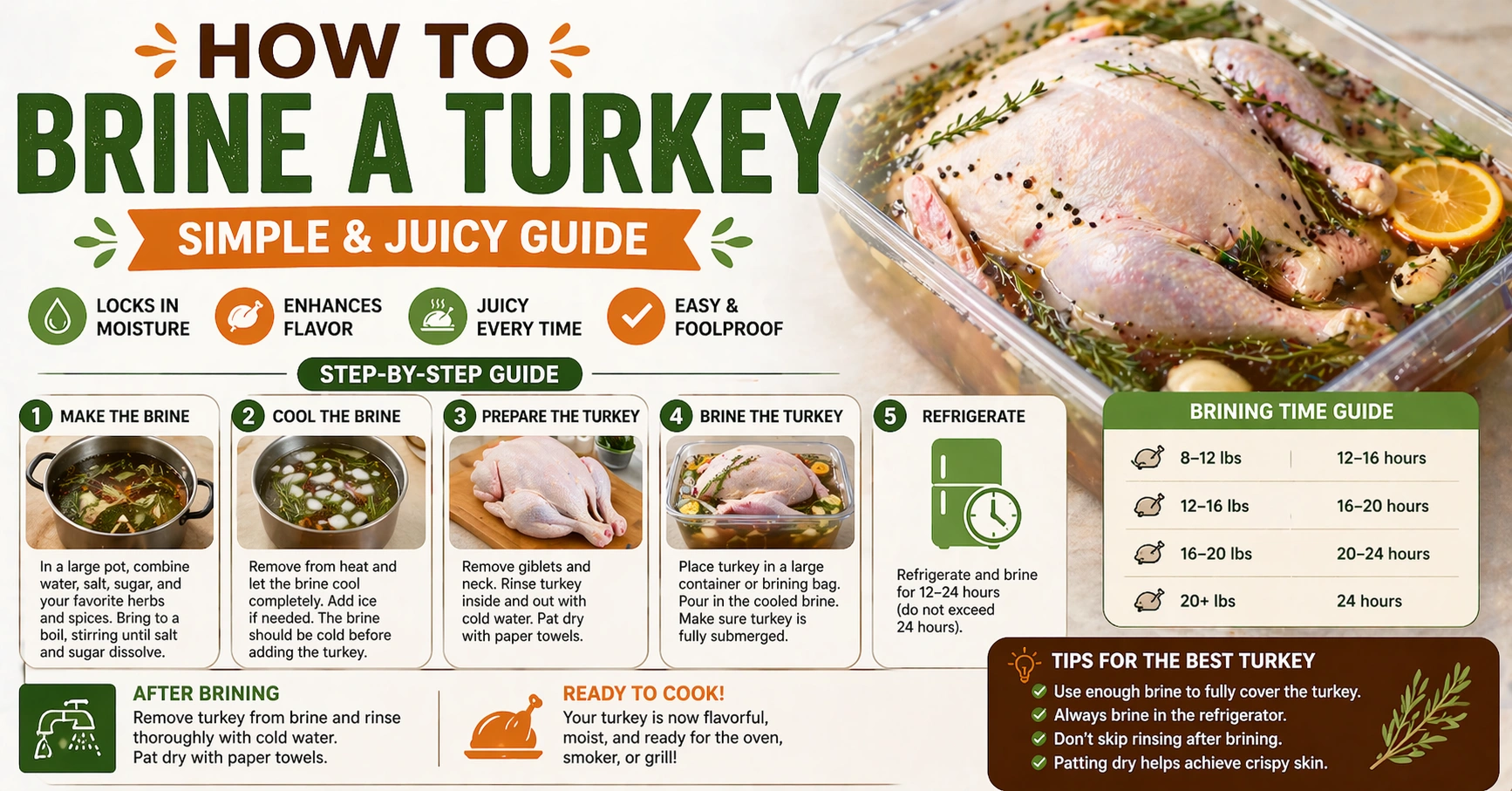
Brining is the easiest way to make a turkey juicy, tender, and full of flavor. If you’ve ever had dry turkey, this method will fix that problem fast. In this guide, you’ll learn how to brine a turkey step by step using simple ingredients and clear instructions.
I’ve used both wet and dry brining at home for years. The difference is huge. Even a basic roast turns out moist and tasty. You don’t need fancy tools—just time and the right salt ratio.
This guide covers everything. You’ll learn how long to brine a turkey, how much salt to use, and when to choose dry or wet brine. We’ll also look at tips for roasting and smoking. By the end, you’ll feel confident and ready to cook a perfect bird.
What Is Brining and Why It Works
Brining means soaking meat in salt water or rubbing it with salt. This helps the meat hold more moisture. It also adds flavor deep inside the turkey.
Salt breaks down muscle proteins. This lets the meat absorb water and seasoning. When you cook it, the turkey stays juicy instead of drying out.
Think of it like marinating, but better. A marinade adds flavor on the outside. Brining works inside the meat. That’s why chefs often recommend learning how to brine a turkey before cooking it.
There are two main methods: wet brine and dry brine. Both work well. Your choice depends on space, time, and taste preference.
Wet Brine vs Dry Brine: Which One Is Better?
Wet brine uses water, salt, and spices. You soak the turkey for several hours or days. This gives a juicy result and mild flavor.
Dry brine uses salt and spices rubbed on the skin. The turkey rests in the fridge without water. It produces crisp skin and deeper flavor.
Here’s a quick comparison:
| Method | Texture Result | Flavor Level | Skin Crispiness | Space Needed |
|---|---|---|---|---|
| Wet Brine | Very juicy | Mild | Less crispy | Large |
| Dry Brine | Juicy | Strong | Very crispy | Small |
If you want easy cleanup, go dry. If you want maximum moisture, go wet. Both are great when learning how to brine a turkey for roasting or smoking.
How to Make a Turkey Brine (Wet Method)
Making a brine is simple. You only need salt, water, and a few extras for flavor.
Here’s a basic recipe:
- 1 gallon water
- 1 cup salt
- ½ cup sugar (optional)
- Herbs (rosemary, thyme)
- Garlic and peppercorns
Heat half the water and dissolve the salt and sugar. Add spices. Let it cool fully before use.
Submerge your turkey completely. Keep it in the fridge or a cooler with ice.
Learning how to make a turkey brine at home saves money and gives better taste than store mixes. You can also adjust flavors to your liking.
How Much Salt to Brine a Turkey
Salt is the key ingredient. Too little won’t work. Too much can ruin the taste.
Use this simple rule:
- 1 cup salt per gallon of water for wet brine
For dry brine:
- ½ teaspoon salt per pound of turkey
Here’s a quick guide:
| Turkey Weight | Wet Brine Salt | Dry Brine Salt |
|---|---|---|
| 10 lbs | 1 gallon + 1 cup salt | 5 tsp |
| 15 lbs | 1.5 gallons + 1.5 cups | 7.5 tsp |
| 20 lbs | 2 gallons + 2 cups | 10 tsp |
Knowing how much salt to brine a turkey helps avoid over-salting and keeps flavor balanced.
How Long to Brine a Turkey
Timing matters a lot. Too short won’t help. Too long can make it salty.
Here’s a simple timing guide:
| Turkey Size | Wet Brine Time | Dry Brine Time |
|---|---|---|
| 10–12 lbs | 12–16 hours | 24–48 hours |
| 13–16 lbs | 16–24 hours | 48 hours |
| 17–20 lbs | 24–30 hours | 48–72 hours |
If you’re wondering how long to brine a turkey, stay within these limits for best results.
Always rinse a wet-brined turkey before cooking. For dry brine, no rinsing is needed.
How to Dry Brine a Turkey Step by Step
Dry brining is simple and less messy. It also gives crispy skin.
Here’s how to do it:
- Pat the turkey dry
- Rub salt evenly over the bird
- Add spices if you like
- Place it on a rack in the fridge
- Leave it uncovered
That’s it. The salt pulls moisture out, then reabsorbs it with flavor.
Many cooks prefer this method once they learn how to dry brine a turkey because it’s easy and reliable.
How to Brine a Turkey Breast
You don’t need a whole bird to enjoy brining. Turkey breast works great too.
Use the same brine recipe, but reduce the time.
Here’s a guide:
| Cut Type | Brine Time |
|---|---|
| Whole breast | 8–12 hours |
| Boneless breast | 6–8 hours |
If you’re learning how to brine a turkey breast, keep an eye on time. Smaller cuts absorb salt faster.
How to Brine a Turkey for Roasting
Roasting is the most common method. Brining helps keep the meat juicy in the oven.
After brining, dry the turkey well. This helps the skin crisp up.
Use a rack in your roasting pan. Cook at 325°F (163°C).
Add butter or oil on the skin for extra flavor.
If you’re planning a holiday meal, knowing how to brine a turkey for roasting can make a big difference in taste and texture.
How to Brine a Turkey for Smoking
Smoking adds deep flavor, but it can dry out meat. Brining solves that problem.
Use a wet brine for best results. It helps the turkey stay moist during long cooking.
After brining, let the turkey air dry for a few hours. This helps smoke stick better.
Maintain a steady smoker temperature around 225–250°F.
Learning how to brine a turkey for smoking ensures your bird stays juicy even after hours in the smoker.
Common Brining Mistakes to Avoid
Many people make simple mistakes when learning how to brine a turkey. Avoid these to get better results:
- Using too much salt
- Not cooling the brine
- Brining too long
- Skipping drying before cooking
- Using a non-food-safe container
Fixing these small issues can improve your final dish a lot.
Tips for Better Flavor and Texture
Brining is just the start. Small tips can boost your results:
- Add citrus for fresh flavor
- Use herbs like thyme or sage
- Let the turkey rest after cooking
- Use a meat thermometer
From my experience, resting the turkey is often ignored. But it makes the meat juicier.
FAQs About Brining a Turkey
1. Do I need to rinse a brined turkey?
Yes, for wet brine. No, for dry brine.
2. Can I brine a frozen turkey?
No. Thaw it first for even results.
3. What if I brine too long?
The turkey may taste too salty and feel mushy.
4. Can I reuse brine?
No. Always make fresh brine for safety.
5. Do I still need seasoning after brining?
Yes, but use less salt.
6. Is dry brine better than wet brine?
It depends on your goal. Dry brine gives crisp skin. Wet brine adds more moisture.
Final Thoughts
Learning how to brine a turkey is one of the best cooking skills you can have. It’s simple, affordable, and makes a big difference. Whether you choose wet or dry brine, the result is always better than skipping it.
Start with a basic recipe. Follow the timing guide. Adjust flavors as you gain confidence.
Once you try it, you’ll never cook turkey the same way again.