
Introduction
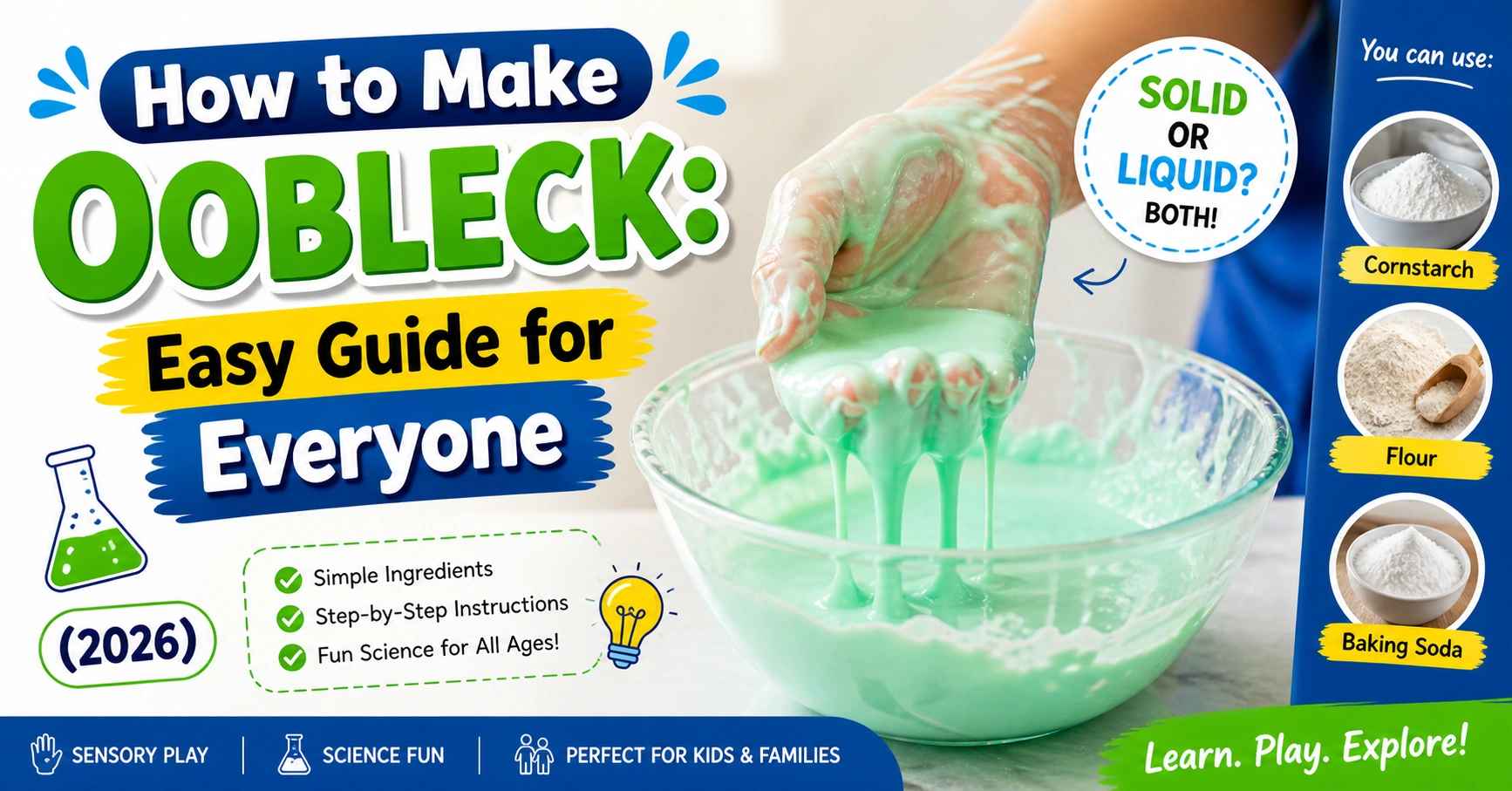
Learning how to make oobleck is one of the simplest and most exciting science activities you can do at home. It looks like a liquid, but it behaves like a solid when you press it. This strange behavior makes it fun for kids, students, and even adults who love hands-on experiments. You only need a few basic ingredients, and you can prepare it in minutes.
Many people search how to make oobleck because it is both educational and entertaining. It helps explain basic science concepts like viscosity and non-Newtonian fluids in a very simple way. You can even customize it using different ingredients depending on what you have at home. In this guide, you will learn multiple ways, including classic recipes and creative alternatives. Everything is explained in easy words so anyone can follow without confusion.
What is Oobleck?
Before learning how to make oobleck, it’s important to understand what it actually is. Oobleck is a non-Newtonian fluid. That means it does not behave like normal liquids or solids. When you touch it gently, it flows like water. But when you apply pressure, it becomes firm like a solid surface.
This happens because the particles inside the mixture react to force. When pressure is applied quickly, the particles lock together. When pressure is removed, they move freely again. This unique behavior makes it popular in science classrooms and home experiments. Oobleck is safe, non-toxic, and very easy to clean. It is also a great way to introduce kids to physics in a fun and hands-on way.
How to Make Oobleck Ingredients
To understand how to make oobleck, you first need the right ingredients. The classic version is extremely simple and budget-friendly. Most households already have everything needed for this experiment. You only need a base powder and water.
Here is a simple breakdown of the basic ingredients used in different versions of oobleck:
Table 1: Basic Ingredients
| Ingredient Type | Purpose | Common Use |
|---|---|---|
| Cornstarch | Main base material | Classic oobleck |
| Water | Activates mixture | All versions |
| Flour | Alternative base | Cornstarch-free version |
| Baking soda | Texture modifier | Experimental version |
These ingredients can be adjusted depending on what you have available. The most important part is getting the right consistency, not the exact material.
How to Make Oobleck with Cornstarch
The most popular method for how to make oobleck uses cornstarch and water. This is the original and most reliable version. It creates the perfect texture that changes between liquid and solid when pressure is applied.
To make it, you slowly mix cornstarch with water in a bowl. The ratio is important. Too much water makes it runny. Too much cornstarch makes it too hard. You should mix until it feels smooth but still thick. When you press it, it should feel solid. When you release it, it should flow again.
This version is widely used in schools because it is safe and predictable. It also gives the best “magic” effect that makes oobleck so fascinating.
Step-by-Step Guide to Make Oobleck
If you want a clear method for how to make oobleck, follow these simple steps. This guide will help you avoid mistakes and get the perfect texture every time.
Table 2: Step-by-Step Process
| Step | Action |
|---|---|
| 1 | Add cornstarch to a bowl |
| 2 | Slowly add water |
| 3 | Mix gently with hands |
| 4 | Adjust texture as needed |
| 5 | Test by pressing and releasing |
You will know it is ready when it feels hard when pressed but flows when left alone. This simple process is what makes oobleck such a fun science experiment. It does not require heating, special tools, or complex preparation.
How to Make Oobleck Without Cornstarch
Many people search how to make oobleck without cornstarch because they may not have it at home. The good news is that you can still create a similar mixture using flour. While it is not exactly the same, it still shows interesting thickening behavior.
Flour-based oobleck is slightly less responsive but still fun to play with. You mix flour with water until it reaches a thick, paste-like texture. It will not behave exactly like cornstarch oobleck, but it is still useful for basic science experiments and sensory play.
This version is great for beginners who want to try alternatives without buying extra ingredients.
How to Make Oobleck Without Cornstarch but with Flour
Another variation of how to make oobleck uses flour in a more controlled way. This method focuses on adjusting water slowly to achieve a semi-solid texture. It is ideal for quick home experiments when cornstarch is not available.
You start by adding flour into a bowl, then slowly mix water while stirring continuously. The mixture should become thick but flexible. It will not fully mimic the classic oobleck effect, but it still demonstrates non-Newtonian-like behavior to some extent.
This version is useful for educational demonstrations and sensory activities for kids.
How to Make Oobleck with Baking Soda
Some people also explore how to make oobleck using baking soda. This method is more experimental. Baking soda does not behave exactly like cornstarch or flour, but it can create interesting textures when combined with water.
When you mix baking soda with water, it forms a grainy, semi-thick paste. It does not create a perfect oobleck, but it can still be used for fun sensory play. Sometimes people add a little cornstarch or flour to improve the texture.
This variation is mostly used for creative experiments rather than scientific accuracy.
Troubleshooting Common Oobleck Problems
When learning how to make oobleck, you may face a few common issues. The mixture can become too runny or too hard if the ratio is incorrect. Luckily, these problems are easy to fix.
Table 3: Troubleshooting Guide
| Problem | Cause | Solution |
|---|---|---|
| Too runny | Too much water | Add more cornstarch |
| Too hard | Too much powder | Add water slowly |
| Sticky hands | Incorrect ratio | Adjust gradually |
| No reaction | Poor mixing | Stir properly |
The key is to add ingredients slowly and test frequently. Small adjustments can completely change the texture.
Science Behind Oobleck
Understanding how to make oobleck becomes even more interesting when you learn the science behind it. Oobleck is a non-Newtonian fluid, meaning its viscosity changes under pressure.
When you press it quickly, the particles lock together, making it feel solid. When you stop applying force, it flows again like a liquid. This behavior is different from water or oil, which always behave the same way regardless of pressure.
This simple experiment helps explain complex physics concepts in a fun and visual way. It is often used in classrooms to demonstrate material behavior and fluid dynamics.
Fun Activities with Oobleck
After learning how to make oobleck, you can enjoy many fun activities. Oobleck is not just a science experiment; it is also a sensory toy.
You can squeeze it, punch it, or let it drip through your fingers. You can also add food coloring to make it more visually appealing. Some people even use it for small science demonstrations at home or school events.
Table 4: Fun Activity Ideas
| Activity | Description |
|---|---|
| Hand squeeze test | Feel solid vs liquid change |
| Color mixing | Add food colors |
| Spoon drop test | Observe flow behavior |
| Shape experiment | Try forming balls |
These activities make learning more interactive and enjoyable.
Safety Tips and Cleanup
While exploring how to make oobleck, safety is important. Oobleck is generally safe because it is non-toxic. However, it should not be eaten or poured down drains.
Always supervise young children during the experiment. After use, dispose of it in the trash instead of washing it into the sink, as it can clog pipes.
Cleaning is easy. Simply wipe surfaces with a damp cloth and wash hands with warm water. Oobleck dissolves easily when diluted with water.
Frequently Asked Questions (FAQs)
1. What is the easiest way to learn how to make oobleck?
The easiest way is using cornstarch and water. This method gives the best texture and is widely recommended for beginners. Once you try it, you will understand how to make oobleck quickly and easily.
2. Can I make oobleck without cornstarch?
Yes, you can. You can use flour or other similar powders. However, the texture may not be exactly the same. Still, it is a useful alternative for learning how to make oobleck at home.
3. Why does oobleck behave like a solid and liquid?
Oobleck changes because of pressure. When force is applied, particles lock together. When pressure stops, they flow again. This is the science behind how to make oobleck interesting and educational.
4. Is oobleck safe for kids?
Yes, it is safe as long as it is not eaten. It is non-toxic and commonly used in schools. Kids enjoy learning how to make oobleck because it is fun and interactive.
5. How long does oobleck last?
Oobleck usually lasts a few hours before drying out. You can add water again to reuse it. This makes how to make oobleck a reusable experiment.
6. Can I store oobleck for later use?
It is not recommended to store it for long periods. It dries quickly and changes texture. Fresh preparation is best when learning how to make oobleck for the best results.
Conclusion
Learning how to make oobleck is a simple yet powerful way to explore science at home. It combines fun, creativity, and education in one activity. Whether you use cornstarch, flour, or other alternatives, the experience is always exciting and hands-on.
Oobleck helps explain real scientific principles in a way anyone can understand. It is safe, affordable, and perfect for kids and families. Try different variations, experiment with textures, and enjoy the surprising behavior of this unique mixture.