
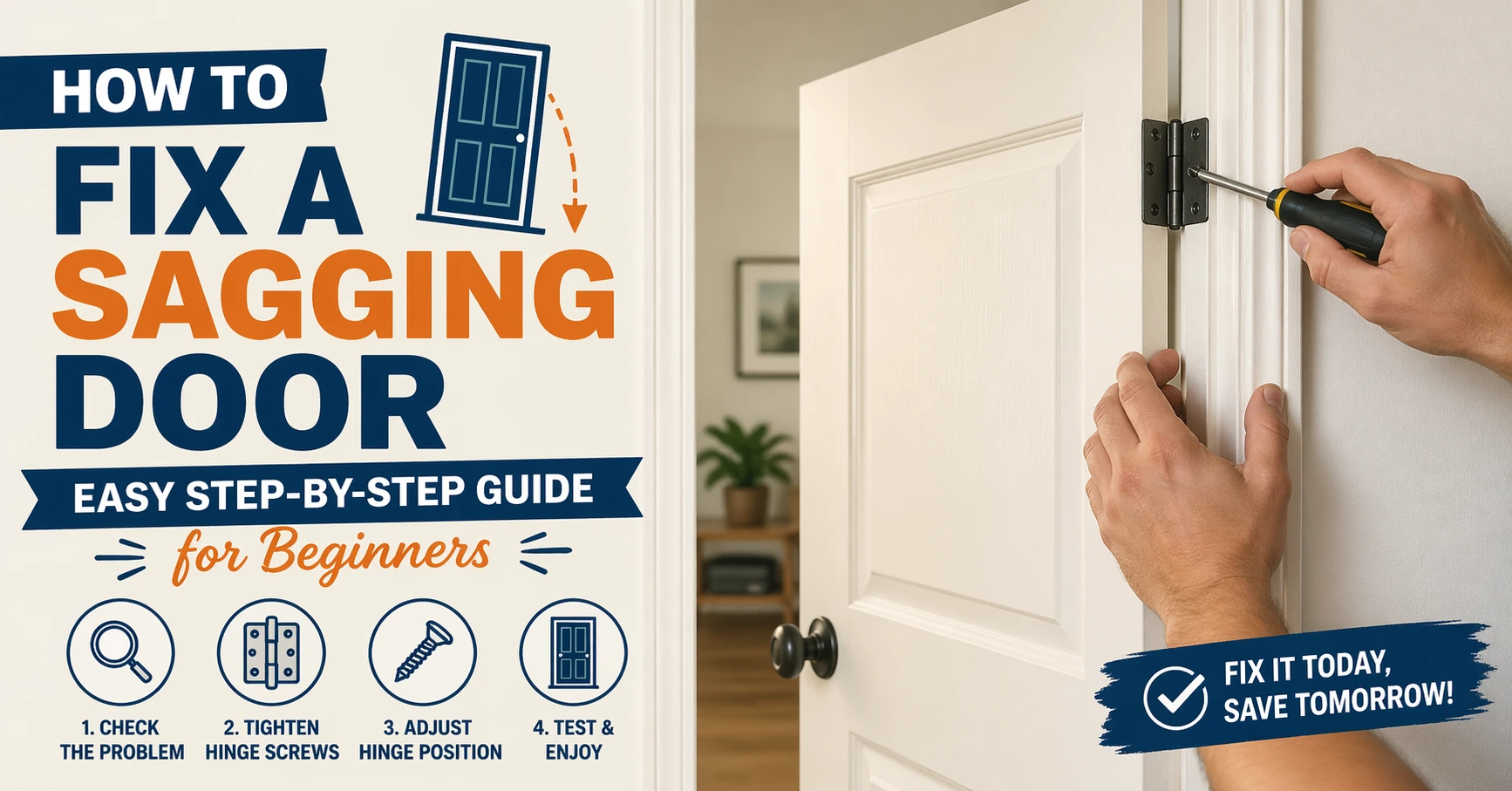
A sagging door can be very annoying. It may rub on the floor, stick when you open it, or not close properly. Sometimes, it won’t even latch. The good news is that you don’t need to be an expert to solve this problem. In most cases, you can fix it with simple tools and a little time.
In this guide, you will learn how to fix a sagging door in the easiest way possible. We will cover different types of doors, common causes, and simple fixes that work. Whether it’s a front door, screen door, or even a car door, you’ll find a solution here.
I’ve personally fixed several sagging doors at home, and most issues were small but ignored for too long. Once you understand the cause, the fix becomes very simple. Let’s get started step by step.
What Causes a Door to Sag?
Before learning how to fix a sagging door, it’s important to understand why it happens.
Doors sag because of weight and time. Over time, screws loosen, hinges wear out, or the door frame shifts. Even small changes can make a big difference in how the door works.
Here are the most common reasons:
| Cause | Explanation |
|---|---|
| Loose screws | Screws in hinges become weak and cannot hold the door |
| Worn hinges | Hinges get old and lose their strength |
| Heavy door | Solid wood doors can pull downward over time |
| Frame shifting | House settling can move the frame slightly |
| Humidity | Moisture can swell wood doors |
Most of the time, the problem is simple—loose screws or hinges. That’s why learning how to fix a door that is sagging is easier than you think.
Signs Your Door Is Sagging
Not sure if your door is sagging? Look for these signs:
- The door rubs on the floor
- It sticks when opening or closing
- The latch does not line up
- You see uneven gaps around the door
- The top corner looks lower than before
These signs clearly show you need to learn how to fix a sagging door that won’t latch or close properly.
Tools You Will Need
You don’t need fancy tools. Most fixes use basic items.
| Tool | Use |
|---|---|
| Screwdriver | Tightening screws |
| Drill | Replacing or adding screws |
| Longer screws | Stronger grip |
| Wood glue | Fixing loose holes |
| Toothpicks or wood sticks | Filling stripped holes |
| Level | Checking alignment |
Having these tools ready will make it easier to follow each step of how to fix a sagging door hinge.
Step 1: Tighten All Hinge Screws
This is the easiest and most common fix.
Start by opening the door. Check all hinge screws on both the door and the frame. Use a screwdriver and tighten each screw firmly.
Many times, this alone solves the problem. I’ve fixed doors in less than 5 minutes just by doing this.
If the screws keep spinning and won’t tighten, the hole may be stripped. Don’t worry—we’ll fix that next.
This step is the first and most important when learning how to fix a sagging door.
Step 2: Fix Stripped Screw Holes
If screws won’t stay tight, the holes are likely worn out.
Here’s a simple trick:
- Remove the loose screw
- Insert toothpicks or small wood sticks into the hole
- Add a little wood glue
- Put the screw back in
This creates a tighter grip for the screw.
| Method | When to Use |
|---|---|
| Toothpicks + glue | Small loose holes |
| Wooden dowel | Bigger damaged holes |
| New screw location | If hole is too damaged |
This method works great when learning how to fix a sagging door hinge without replacing parts.
Step 3: Replace Screws with Longer Ones
Sometimes, the screws are just too short.
Replace one screw in the top hinge with a longer screw (around 3 inches). This helps pull the door back into place.
The longer screw goes deeper into the wall frame, giving better support.
This is one of the most effective tricks for how to fix a sagging exterior door, especially heavy front doors.
Step 4: Adjust or Replace Hinges
If tightening doesn’t work, check the hinges.
Look for bent or worn hinges. If they look damaged, replace them.
You can also slightly bend the hinge back into shape using pliers. Be gentle.
| Problem | Solution |
|---|---|
| Bent hinge | Straighten carefully |
| Rusty hinge | Replace it |
| Loose hinge | Tighten screws |
This step is very useful when learning how to fix a sagging aluminum storm door or older doors.
Step 5: Use Shims for Better Alignment
Sometimes, the door needs better positioning.
You can use thin cardboard or wood pieces (called shims) behind the hinge.
Steps:
- Remove hinge screws
- Place shim behind hinge
- Screw it back
This pushes the door slightly and improves alignment.
This trick is often used when fixing how to fix a sagging door that won’t latch.
Step 6: Check the Door Frame
If nothing works, the problem might be the frame.
Houses settle over time, and frames shift slightly.
Use a level to check if the frame is straight. If not, you may need to adjust it.
This step is more advanced but important when learning how to fix a sagging exterior door.
How to Fix a Sagging Screen Door
Screen doors are lighter but still sag.
To fix:
- Tighten hinge screws
- Add a diagonal brace
- Adjust tension rods if available
| Fix | Result |
|---|---|
| Tight screws | Basic alignment |
| Add brace | Stops sagging |
| Replace hinges | Long-term fix |
This is the best approach for how to fix a sagging screen door and keep it working smoothly.
How to Fix a Sagging Storm Door
Storm doors often sag due to frequent use.
Steps:
- Tighten all screws
- Replace worn hinges
- Install a support chain
For aluminum doors, check for bending.
This method works well for how to fix a sagging aluminum storm door and improve durability.
How to Fix a Sagging Aluminum Screen Door
Aluminum doors are lightweight but can bend.
To fix:
- Straighten the frame gently
- Tighten screws
- Add corner brackets
Avoid using too much force. Aluminum bends easily.
This helps when dealing with how to fix a sagging aluminum screen door.
How to Fix a Sagging Car Door
Car doors sag for different reasons.
Common causes:
- Worn hinge pins
- Loose bolts
- Heavy use
Fix steps:
- Replace hinge pins
- Tighten bolts
- Use a jack to lift door slightly while fixing
| Issue | Fix |
|---|---|
| Loose bolts | Tighten |
| Worn hinge pin | Replace |
| Misalignment | Adjust carefully |
This is useful for how to fix a sagging car door, especially older vehicles.
Preventing Door Sagging in the Future
Prevention is always better.
Here are simple tips:
- Tighten screws regularly
- Avoid slamming doors
- Use strong hinges for heavy doors
- Check alignment every few months
These habits will reduce the need to repeatedly learn how to fix a sagging door.
Common Mistakes to Avoid
Many people make simple mistakes:
- Ignoring small issues
- Using weak screws
- Over-tightening screws
- Forcing the door
Avoid these to make your fixes last longer.
FAQs
1. How do I know if my door is sagging?
If it rubs, sticks, or won’t latch, it’s likely sagging.
2. Can I fix a sagging door myself?
Yes, most fixes are simple and require basic tools.
3. Why won’t my door latch?
It may be misaligned. Learn how to fix a sagging door that won’t latch using hinge adjustments.
4. Do I need to replace the door?
No, most problems can be fixed without replacing the door.
5. How long does it take to fix?
Usually 10–30 minutes depending on the issue.
6. What is the easiest fix?
Tightening hinge screws is the fastest solution.
Conclusion
Now you know exactly how to fix a sagging door in different situations. From simple screw tightening to hinge replacement, most solutions are easy and quick.
The key is to find the cause first. Once you do that, the fix becomes simple. Even beginners can handle it without stress.
I’ve personally seen how a small fix can save time, money, and frustration. So don’t ignore a sagging door—fix it early.
Take a few minutes today, check your door, and apply these steps. You’ll be surprised how easy it is to make your door work like new again.